

Housing and planning experts have debated the issue of building on green belt land to alleviate the strain of growing cities.
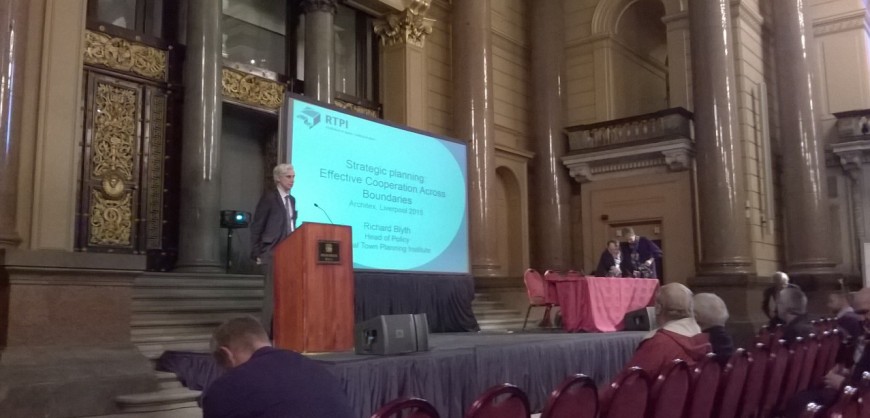
Speaking at the ArchitEx 2015 conference, the panel believed while brownfield site building must come first, it could be time to readdress the borders of green belts.
Included in the debate was Julia Thrift, head of projects and events for the Town & Country Planning Authority; Tom Bloxham MBE, chairman and co-founder of Urban Splash; and Stephen Hodder, chairman of Hodder+Partners.
Tom believes building on brownfield sites first is always the main priority but called for a debate on developing on green belt areas that need growth.
“I think green belts are a very emotive question, as soon as you say the word ‘green belt’ people take a very polarized view.
“Firstly, I say it should definitely be brownfield first developments and we should actually try to build near transport. However when you look at the detail of green belts, the green belt contains all sorts of different land, some of it is very, very valuable land and some of it is farm land.
“A lot of latches – old industrial parks – I think in the London green belt there are two or three Tube stations.
“There were lines drawn at one point and I think it’s up for debate exactly where the green belt should be and I think there’s elements of green belts in some classes that actually need developments, particularly more in the south than the north where there are still opportunities for brownfield developments.
“I would suggest we have a proper, reasoned and rational debate about parts of any of the green belt needs developing or can be developed, and equally, what other parts of our cities and our country should be designated as future areas and this should be a very democratic debate including as many people as possible.
“Once that debate’s been decided, we should actually get on with developing buildings of the highest architecture.”
Stephen agreed with the principle of brownfield-first, citing that borders of green belt land need developing while using the example of Oxford’s St Catherine’s College – which was built on the border of the greenbelt.
“I think the point Tom makes about brownfields is absolutely right but I think he spoke earlier about the housing shortage but I think we are not going to be able to deliver the amount of homes that we need on the brownfield that’s available.
“The RIBA, in its white paper to the general election, was very clear on what’s really needed is a audit and review of green belt because there are probably edges that we need to look at.
“I think that we shouldn’t preclude development at the edges if we feel that the land is simply not contributing the green belt.”
Julia, who had earlier spoken about the viability of ‘garden cities’, believed that there is space to build on and that the borders of the green belt should be looked at for the 21st century.
“I agree with most of what’s already been said, it is very difficult to talk about the greenbelt because it’s a very emotive subject but if you look at a lot of it, it’s not actually terribly high-quality green space at all.
“So I absolutely agree that we should build on brownfield sites first but shouldn’t mean that we cram our cities to the extent that they become unpleasant places to live.
“We also need green spaces in cities and that’s hugely important particularly with the effects of climate change making our cities warmer so we need green spaces to cool them.
“We need to think carefully about building on brownfield sites; build on them where it’s appropriate and they’d be good places to build, not where they wouldn’t be.
“And then yes, I agree, take a very careful look at the green belt and see if it’s doing what we hope it’s doing and in some places it is and some places it’s not with poor places and scrubby land that people can’t even access.
“Perhaps it should be improved, the quality improved for better public access and recreation. It’s worth thinking that green belts were designated 60 years ago – the lines on the map were drawn that far away; it is time we relooked at it.
“When the green belt was introduced, the quid pro quo was that we would build new towns, so the idea was that our existing towns and cities wouldn’t just grow, and grow and grow and that there’d be green belt round them, but we’d build new towns to create enough housing for everybody; and what we’ve done is that we’ve kept the greenbelt but we’ve stopped building the new towns.
“We do have plenty of land in this country only about 5% of it is built on; there’s plenty of space to build new housing but we have to be bold enough to make that happen. It’s perfectly possible.”
Related posts:
 Urban Splash to ‘become the designer brand for housing’
 Council outlines framework for Bombed Out Church repairs
 Over 150 new apartments planned for Duke Street
 Historic Liverpool bank could become city’s first five star hotel
 Plans for £10 million Anfield training hotel look set for approval
 Shakespeare North to receive £6 million in funding


