


When Tate Liverpool first opened its doors in 1988, the gallery was an oasis of hope, belief and vision which transcended the harsh realities of a city in the midst of its nadir.
Liverpool by the 1980s was Britain’s ‘shock city’. Once the second city of the British Empire, it was a port that rivalled its own capital city in global significance. Albert Dock, when built in 1848, symbolised a city that was at the forefront of innovation and confidence in its own conviction; the elegance of its towering Doric colonnades, tantamount to an ‘industrial palace’ in itself.
At this point in time, the city’s port was handling an estimated one-third of all world trade. In fact, it would be in this very city that Henry Tate, owner of sugar refiners Tate and Lyle, would first earn the fortune that, in turn, funded the famed art collection now housed at the gallery which bears his name in London.
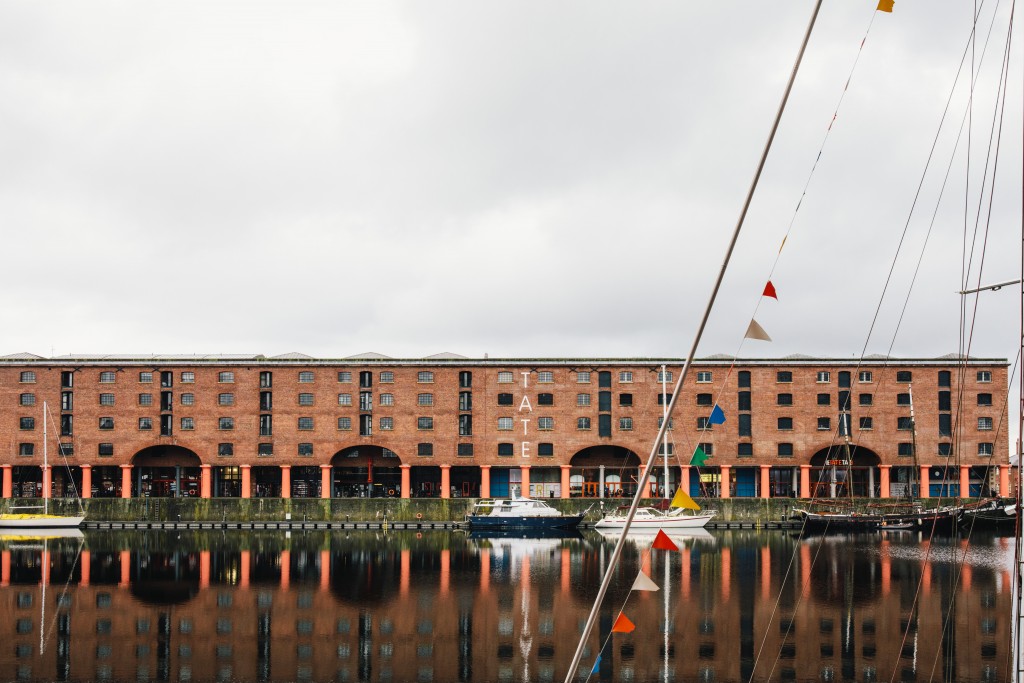
© Rachel Ryan Photography
It is not inaccurate to suggest that the city’s prosperity has so often been articulated by the dock’s fortunes. When the decision was made to breathe new life into the site in 1981, the by-now derelict remains of Albert Dock stood as a pale imitation of its former self; a sorry, muddy wasteland which appeared destined for a final meeting with the wrecking-ball and a far cry from the scenic beauty of a setting that now forms part of the UNESCO World Heritage site we see today.
Even for a city with such inalienable international artistic renown (it practically invented pop music, for God’s sake!), Liverpool in the 1980s, beset by the ongoing impacts of the brutality of Thatcherism, perhaps did not appear the obvious choice for the opening of the ‘Tate of the North’.
Fast forward 32 years, however, and the decision now looks nothing short of inspired. Tate, long known for its radical and, so often, brave approach to artistic expression, found the perfect bedfellow in a city that has reinvented itself with these same values over the past three decades.
The relationship between the gallery and the resurgent city of Liverpool, in 2020 a proudly internationalist, non-conformist, cosmopolitan city, could now not appear more natural.

Mikhail Karikis, Ferocious Love 2020 © Mikhail Karikis
As the city looks to emerge positively from the COVID-19 crisis, the latest exhibition at Tate Liverpool, ‘Ferocious Love’ by Mikhail Karikis reflects on young people’s perspectives on an uncertain future. In so many ways, Karikis’ work couldn’t be more appropriate for a city that now faces its biggest challenge since the gallery’s opening during the city’s most desperate days during the late 1980s.
Karikis and his collaborators imagine a weather system in 2050 where there will no longer be seasons as we know them. Sung by members of the protest choir The Liverpool Socialist Singers, a composition of weather-like effects echoes noises of turbulent meteorological phenomena.
Within this noise environment, a video installation created in collaboration with students from Birmingham School of Art features an imagined community of young people who reflect on how a calamity might bring them together. Imagining another altogether believable international crisis should come easily given the events of the past year, with the installation particularly moving given its undeniably appropriate nature for the times we are currently facing.

Mikhail Karikis, Ferocious Love 2020 installation view © Tate Liverpool, Roger Sinek
Inspired by young people’s environmental activism, Ferocious Love resonates with the yearning for hope and the younger generation’s awareness of the scope, complexities and nuances of dramatic change. Avoiding alarmism, the installation focuses on emotional responses and the need for human togetherness in the face of crisis.
As has been the case all so often for these past 32 years of Tate Liverpool’s existence, this latest installation movingly captures the mood of a city which faces an apprehensive future but one that will undoubtedly resort to the same values it always has – solidarity, invention and expression.
Just as the gallery was back in 1988, it appears that Tate Liverpool is still as much of an oasis of hope, belief and vision in this city as it was three decades previously.
‘Mikhail Karikis: Ferocious Love’ is at Tate Liverpool until 22 November 2020. To visit, free tickets must be booked in advance at tate.org.uk/visit
Related posts:
 Art exhibition by schools to launch at waterfront gallery
 Exhibition inspired by empty homes project to feature Adrian Henri works
 Anfield man to show hidden art talent in exhibition of star-studded drawings
 Popular etchings exhibition heads to Sudley House
 Tate Liverpool to present first UK retrospective of Lucy McKenzie
 Turner Prize returns to Tate Liverpool in ‘huge coup’ for city


