

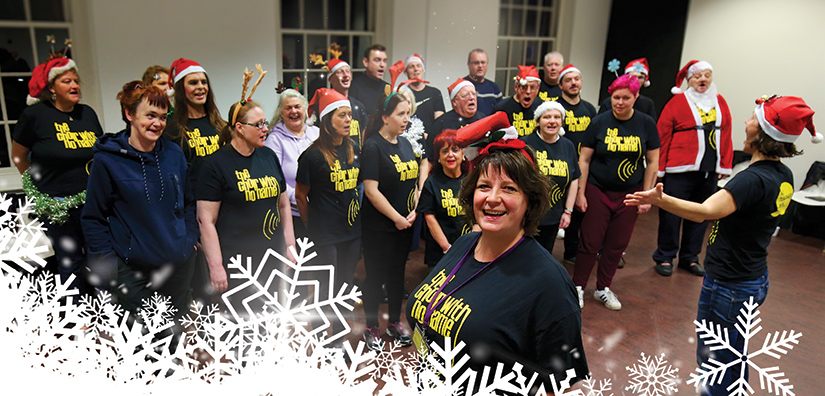
Choir With No Name: Escape through music
Interview with manager Ema Quinn
Founded eight years ago by a London hostel worker, The Choir With No Name offers those affected by homelessness an escape through the power of music. for almost three years, the choir’s liverpool branch has been providing the city’s less fortunate with a chance to forget their problems with song and enjoy a hot meal. Fresh from the choir’s biggest ever gig at St George’s Hall, Your Move speaks to manager Ema Quinn on the vital support the group provides to its 60 members.
Interview by Lawrence Saunders
How did the Choir With No Name come about?
A woman called Marie Benton, who was a senior support worker at St Mungo’s hostel, founded the choir in 2008 in London.
Marie had, herself, joined a choir and was aware of the feel good factor it was having on her personally. She decided to put two and two together and set up a choir for people who were homeless, and its grown from there.
The choir is made up of members who are affected by homelessness but we also take in people who come under remits of recovery from addiction or mental health because they’re at risk of becoming homeless.
How did the choir start in Liverpool and how did you get involved?
The original plan before the whole funding climate changed was to open a new choir in a new city each year. Now, due to changes with public funding, it hasn’t been possible but the idea is that we still open new choirs where there is a need in a city.
Liverpool was a perfect place in this regard – we’ve got high levels of homelessness and more complex needs amongst the homeless than any other core city.
I’ve been in the post for over two and half years now. My background is within mental health and the arts. For me it was the perfect marrying of two worlds – the arts and helping people to recovery.
> Related | Charity concert to mark the Cavern Club’s 60th anniversary
What is the aim of the choir?
The whole point of coming to the choir is that you don’t have to be with your problem when you’re with us – you can leave it behind and have fun.
We don’t have any formal processes. For instance, we don’t have case logs on anybody, we don’t insist that people follow referrals – they come as an independent human being and they get to be themselves.
What does your role entail?
It’s everything really. It’s the day-to-day mundane practicality of planning rehearsals to recruiting and training volunteers, fundraising, organising gigs and pastoral care.
This includes visiting people in hospital, helping members sort out their housing needs or just being a friend to talk to. A lot of it is ‘mum’ stuff really – what a lot of us might turn to mum for. These people don’t have that.
Every choir rehearsal ends with a meal. How important is this to members?
Hugely important – every rehearsal ends with us sitting down for a meal that our volunteers have cooked from scratch in the professional kitchen at Bluecoat.
For some of our members that might be the only hot meal they get that week, or their only experience of sitting down with a family.
It’s a really important part of the bonding and that will be the time somebody tells you something that’s going on for them – it’s a really essential part of what we do.
“The whole point of coming to the choir is that you don’t have to be with your problem when you’re with us – you can leave it behind and have fun.”
How vital are the volunteers to the operation?
The volunteers act as a friend in the choir. If you turned up to a practice you would not be able to guess who was a volunteer and who was a member.
The volunteers who sing in the choir help deal with any issues and support the practicalities of bringing items from one place to another for a gig. They also cook the meals and do the washing up – just everything; they are the backbone of the choir.
Here in Liverpool our volunteers are a highly skilled bunch – it’s unique to the city and we’re really lucky.
Do you have any recent success stories?
We’ve just had a couple of our younger members get their first flat and first job. When they came to us they were both living in hostels and now one of them is working for the Riverside Group and the other is working for the YMCA in St Helens.
However we don’t emphasise stories like this amongst the members. With anywhere that’s funded everyone always wants to know the success stories, but for us you don’t have to be anything. You’re not your problem, you’re not your success, you’re not anything but a human being having fun singing.
The choir held its ‘Big Autumn Gig’ at St George’s Hall in October. How did it go?
It was amazing but nerve-racking because it was the first time in Liverpool that we’ve hosted our own gig. It was a huge undertaking but it was just so exciting. The buzz from the audience who were standing and signing along with us was amazing.
We couldn’t have done it without the support of the Sovini Group and it has opened up a lot of opportunities because when you make a big noise like a gig at St George’s Hall it sparks people’s awareness of you.
> Related | Interview with The Whitechapel Centre’s manager, Ruth McCaughley
Is funding a big issue for the choir?
We are constantly in a funding crisis. We have a mixture of people who instantly understand how powerful something like the choir can be to change somebody’s life and, unfortunately, people who really don’t understand that at all.
Most funders like to back short-term projects and it’s very difficult to get funding for ongoing, week-in-week-out work. Funders want a beginning and an end they can shout about and they want to know that success has come about solely because of their funding. In real life it just doesn’t work that way.
‘The Choir with No Name Big Christmas Singalong’ takes place later this month. How are preparations going?
Going well! Up until now, every year all four choirs have got together for a big gig in London and it’s a massive boost for our members. One day they’ll be at the Whitechapel Centre talking about the problems they’re having with trying to get accommodation and the next they are performing on the South Bank.
This year we’re doing the event in Birmingham which is slightly different because we’re too big to all perform in the same space now. Everyone’s really excited to visit our Birmingham friends because we also encourage connections between the choirs. That’s essential in people’s ability to mobilise around the country as well.
Related posts:
 Charity at Christmas: How to make a difference in Liverpool
 Christmas countdown: Festive family fun in Liverpool
 The Liverpool Mass: Interview with Thierry Balasse, the man performing 1960s music piece for the first time
 Thurston Moore interview: Sonic Youth frontman talks to Your Move ahead of Liverpool gig
 Liverpool Christmas market to be officially opened this week
 Season of good will: How you can help those in need this Christmas


