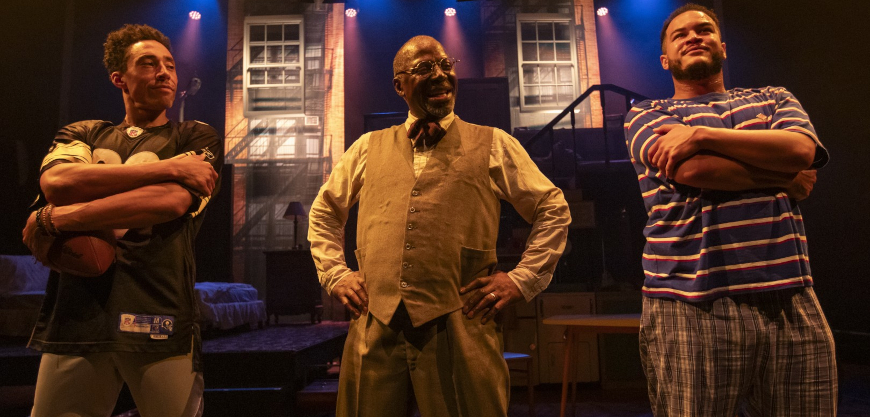
Death of a Salesman at Liverpool Everyman
⭐⭐⭐⭐
Reviewed by Robin Brown
Spoiler alert: there is a death. Of a Salesman. Hopefully that doesn’t come as too much of a shock. In any event, it’s the getting there that counts. It’s not a whodunnit, but a whydunnit, and there are plenty of suspects.
Arthur Miller’s timeless play was written in 1948 but remains surprisingly relevant. ‘Too many people’, rented white goods, built-in obsolescence and even the urban encroachment on homes (think of those warehouses looming over people’s homes) all resonate.
One of the defining characteristics is how capitalism forces people into roles they don’t want or suit – and makes promises it can’t keep . When those expectations collapse, what’s left, apart from a fridge on tick, a car that’s knackered just as you pay it off and a family home everyone leaves just as the mortgage is dispatched?
These are the questions that confront Willy Loman – full-time salesman, part-time fantasist – declining quickly into dementia or psychosis, haunted by suicidal thoughts and visions of the past. Here, he is reimagined as an African immigrant, apparently married to an Irish woman and in charge of two feckless sons. Poor Willy is about to lose his job, lose his family and lose his mind. And he’s only just getting started.
This shift in the heritage of the Lomans, imagined by Arthur Miller to be of Jewish stock when he wrote Death of a Salesman, gives this new production, directed by Tristan Fynn-Aiduenu, a fresh take. As hard-working immigrants, they need to maintain a smile, take the falls and keep up with the Joneses. The tight supporting cast are up to the challenge. Laurence Ubong Williams is particularly impressive as Willy’s shiftless, beaten Biff. Once the apple of his father’s eye, with the world at his feet, Biff sees the lie, the trap of work for what it is and rejects it, to Willy’s anguish.
But the play belongs to Cyril Nri.
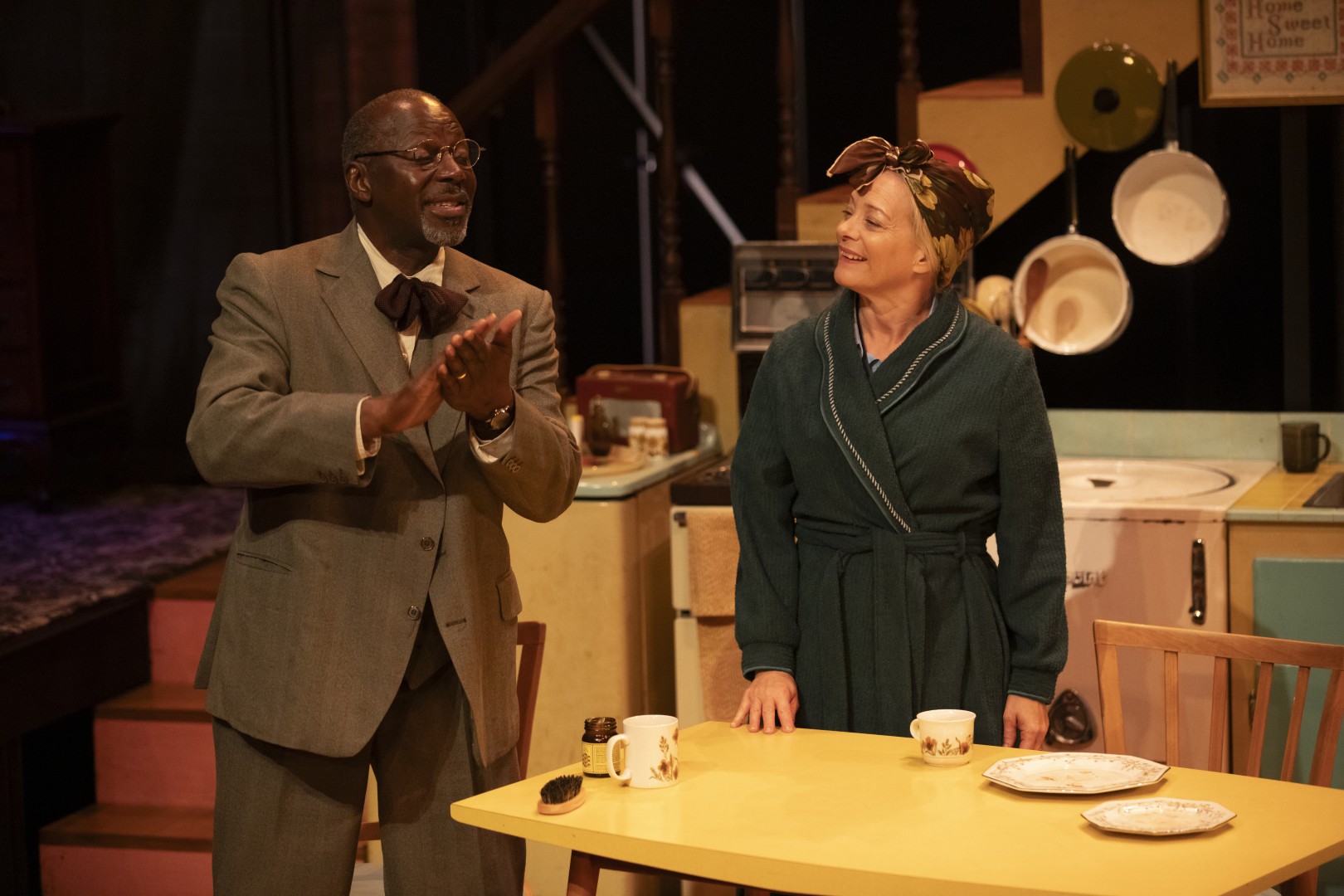
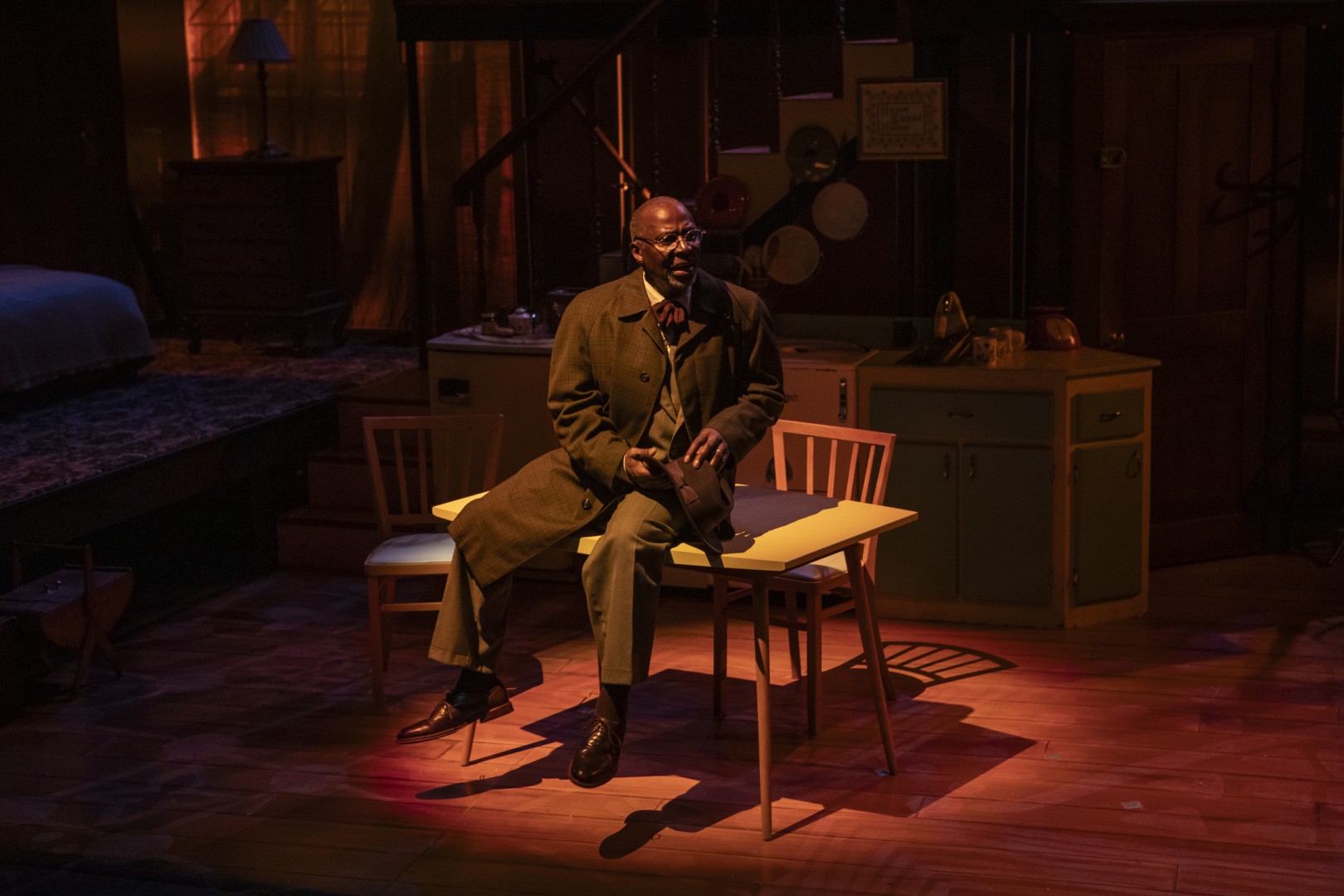
Through his performance we see Willy’s unravelling, which arguably starts not when he stumbles home from work, 24 hours before the play’s denouement, but decades before. For over three hours the cast wrestle with the play, Nri on stage for much of it and often without so much as a feed line. In Nri’s Loman we see a man who might just sustain the reality he so desperately wants by willing it into existence. He’s kept his side of the bargain, after all. His failure as a breadwinner and a father is devastating to him, a particular despair that has the power to resonate with men today.
There is still charm in him, still vanity, still love and still the conviction that, somehow, if he can only sell himself hard enough, the world will finally buy him. That is what makes Nri’s performance so masterful: the collapse is devastating because the hope is so convincing.
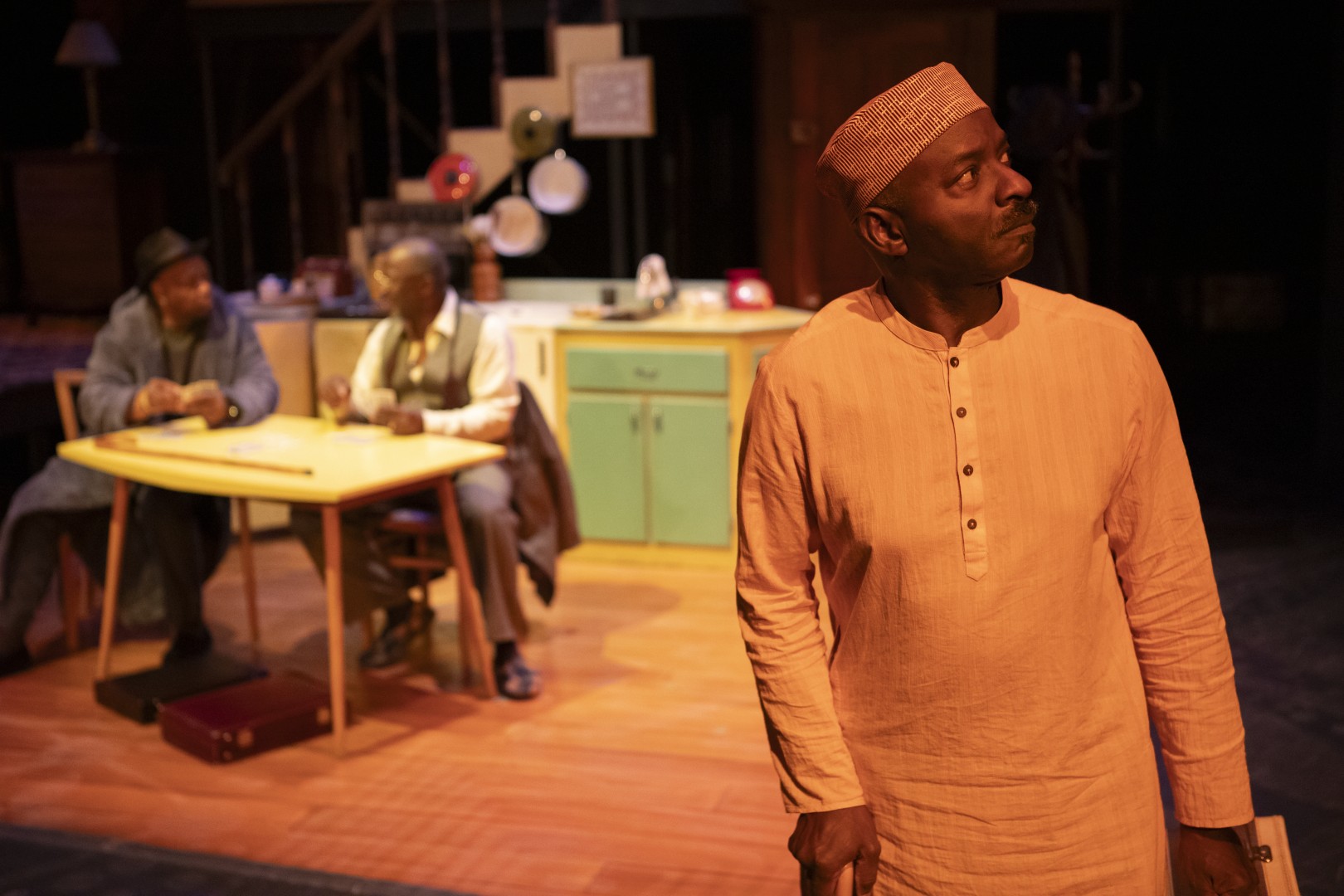
Not all of the changes work. Some anachronistic features – smartphones, vapes, laptops – add nothing but bemusement, while the African stylings, represented by occasional Igbo dialect, music and accents, sometimes stick and often don’t. Miller’s original text has Willy’s recently deceased brother, Ben, heading to Africa to make his fortune. You can see why it might have tempting to go the whole hog.
The production may not always know what to do with its ideas, but Nri knows exactly what to do with Willy Loman. He gives us a man who has spent a lifetime believing he was one sale, handshake or lucky break away from the life he was promised. Cyril Nri gives the production its centre of gravity: a masterful Willy Loman. By the time the dream finally collapses, we have watched him build it, defend it and desperately try to sell it back to himself.
Death of a Salesman is at Liverpool Everyman until 10 October





Images © Ali Wright
Related posts:
 Benefit at Lantern Theatre review
 Interview: ‘Hellraiser’ star Doug Bradley
 The Interview: ‘Peaky Blinders’ actor Joe Cole talks to YM Liverpool
 Liverpool Theatre School opens the door for talented performers
 New manager appointed at Liverpool’s historic Epstein Theatre
 Lauren McQueen interview: Liverpool actress on her career so far & role in ‘Band of Brothers’ follow-up ‘Masters of the Air’