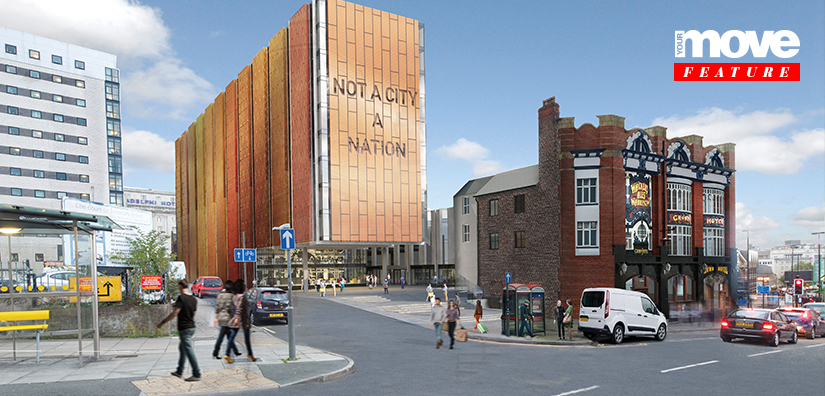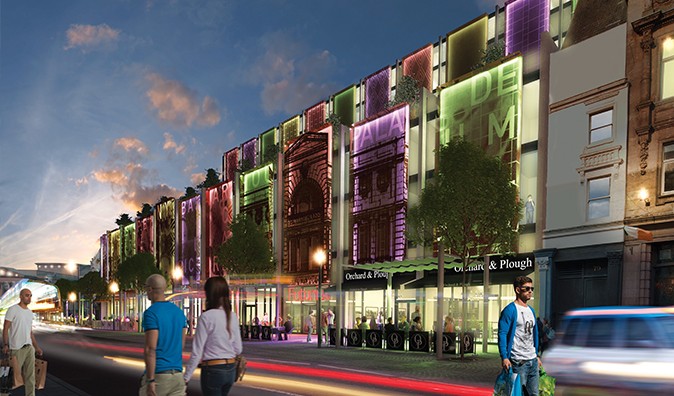
As proposals to transform Lime Street into a vibrant city gateway are resubmitted for planning permission, we caught up with Steve Parry, managing director of the team behind the plans Neptune Developments, to find out more.
How would you summarise your plans for Lime Street?
Steve Parry: There are a number of elements to it and the element that has come forward first, for which the planning application has been modified and resubmitted, is the one we call the Eastern terrace of Lime Street. [Neptune’s original
plans for the project, in collaboration with Regeneration Liverpool, were widely criticised earlier this year].
Effectively what we’re looking to do is to create a new frontage onto Lime Street which is going to have a combination of retail and leisure on the ground floor likely to be restaurants, café bars, etc, as well as shops and then on the upper floors we’ve got a hotel operator we are in quite late stages of negotiation with for a hotel with around 101 bedrooms.
Behind that we will have a block of very high quality student accommodation. Obviously there’s a big debate in the city at the moment about the volume of student accommodation and the location of it. We’re of the view that it’s
about the quality of the product but also the location and obviously the proximity to the railway station and the universities – as well as JMU’s proposals for the Royal Mail sorting office on Copperas Hill – it’s actually the place
to be.
We’ve looked in a great deal of detail whether we could do anything with the Futurist building and the Futurist façade and we had two lots of structural engineers’ reports about that, which we’ve shared with the Save the Futurist people,
and unfortunately it was beyond redemption so what we’ve tried to do is to really capture the excitement of Lime Street in the past. It was a bit like a mini Piccadilly Circus or Time Square with a lot of illumination, adverts and vibrancy
particularly of a night.
One proposal is to replicate the façade of the Futurist so you’ll actually see an image of the Futurist on the front façade and that will be backlit of a night.
We’re also looking to feature some words on there that reflect the history of the street so there’s some artist involvement in that, that’ll be a condition on the planning. It’ll be interesting. It’ll be backlit at night so it’ll really stand out.
We’re also working on the ABC and trying to turn that into an exciting venue. We’re working with (music entrepreneur) Mark Cowley. We have the idea of an auditorium with TV studios and restaurants inside and there’s a celebrity chef involved in that. What we’re hoping we can do, and obviously it’s not totally in our control because there are other ownerships involved, is lift Lime Street from the doldrums. That’s what the idea is, to have an appropriate entrance to the city.
What will happen to the existing businesses?
SP: Most of the businesses in Lime Street on the eastern side are already relocating. On the other side, we’re not proposing to relocate anyone and that’s in different ownerships but we have spoken to one or two of the business owners and one particular party who has got quite a prominent building on the corner has said as this is happening they are likely to reinvest in their building and the tenant is likely to reinvest.
What you find with regeneration is other people invest in the area as well because people realise once a place starts improving they can move their business further upmarket and do a better job.

What has taken so long?
SP: Lime Street as you know has been a point of contention with the people of Liverpool for a long time because of its condition. One of the problems over the years – and it has taken years and the process is still ongoing – has been to acquire all of the central properties. If you look along the street virtually every building was in separate ownership
at one stage and then the previous people who did try and assemble the sites went in to receivership.
So there’s been a lot of issues about buying in Lime Street. That’s been a real headache and that’s taken quite a few years. There are still one or two bits that are in the process of being acquired at the moment.
You mentioned the campaigners who were against the plans, particularly those involving the futurist building. What has made them come round to the plans?
SP: There are people in life who campaign just for the sake of it but these people were genuinely keen on the building and what it stood for. The problem is a lot of people look at the outside and the façade looks a bit scruffy but you don’t
realise how bad it is behind. I think they moved their position once they saw the structural engineers’ reports and they realised how bad it is. The whole place is unsafe. They weren’t keen on the original design because they didn’t think
it reflected enough of the Futurist and the history of the city as a cinema location so when we came up with the proposal to use the façades to tell the story of Lime Street that’s when they realised our hearts were in the right place.
How will the talk show element work?
SP: It’s a bit sensitive at the moment because there are a number of production companies involved. The auditorium itself works without the television aspect but that would be a real benefit and would really make a big difference to the image of the building but also the city. I know some very important names are involved.
What kind of events are you envisaging for the auditorium?
SP: It’s a soundstage so primarily music. It fits into a different size range from some of the other venues in the city. It’s primarily a live music venue. It’s not a theatre, it doesn’t impact on the Royal Court or the Empire.
Can you reveal which restaurants will be involved?
SP: Not yet. There are some discussions going on with a very well-known brand. A well-known celebrity chef.
If planning permission is granted when will work begin?
SP: Subject to finalising the deals on the remaining properties we’re looking to be starting the demolition towards the end of September with the buildings being completed for the summer of 2017.