Earlier this month representatives from student, developer and resident groups across the city came together to discuss one key issue – the sustainability and impact of student
accommodation development within the city centre.
It’s a topic that has divided the city, prompting Liverpool city council to announce a review into its viability earlier this year. Chaired by Councillor Frank Hont, Liverpool’s cabinet member for housing, the review group was tasked with coming up with a selection of recommendations for planning decision makers.
With a report due later in august we’ve put together our own panel of experts to find out:
Is there too much student property in Liverpool City Centre?
Alan Bevan, managing director, City Residential

The popularity of Liverpool as a place to study, coupled with the city’s universities continued rise up the national rankings, has persuaded many developers to construct purpose built
student schemes. Whilst we have previously voiced our concerns on the number of schemes in the pipeline, the more important question is are we building the right type of scheme in the right location? Indeed one of the main focus points of the recently convened student task force panel (on which we sat) was to ensure that future student development in the city is “appropriate” to the likely demands from students.
With student numbers unlikely to grow much over the next few years (even with the removal of the numbers cap) developers are definitely carrying out more extensive market due diligence. The expected increase in overseas and international students (at the expense of local/UK students) will also force developers to consider their product/locations more carefully than perhaps has been the case in the past. There is no doubt that some of the older, less well located stock that is unable to compete on price may well be the first casualties of the increase in supply although there is still a very strong demand for the affordable end of the market in the city as long as it is well located.
Bill Addy, chief executive, Liverpool BID

Bill Addy, Liverpool BID
What we need to emphasise is that, as a city, we recognise we have three great universities, six within a short distance of the city. Knowledge is a key economic driver in the city, therefore we should encourage students. It’s great to see that students are coming in to live in the city centre in well managed secure environments which a lot of the new properties are. That’s what we should actively encourage but obviously we have to make sure we don’t over dominate areas so we don’t see students take over areas that have been traditionally residential or students taking over commercial areas.
I think the balance is right at the moment. Currently students are based on the edge of the city centre, in areas such as Ropewalks, Chinatown and Islington. They’re the places where historically we haven’t had a lot of development. From a business point of view – it’s great for city centre businesses. Not only do our retailers and restaurants get the customer, it’s a ready supply of staff. Is there an over-supply of student accommodation? At the moment, I don’t think so.
Cllr Frank Hont, cabinet member for housing

Cllr Frank Hont, chair of student property review
We spent three days (during the review) talking to landlords, developers, student groups, universities and, most importantly, residents who live near these large accommodation blocks.
What you’ve got to bear in mind is within the contracts of the planning regulations the planning committee which approves plans for those types of developments is an independent committee. It takes its decisions independently so as a council we can’t influence the decisions of the planning committee. What we can do is produce this report so that when they take individual planning decisions they’re better informed. They will have to take the decisions on a case by case basis but those decisions will be better informed as a result of this review.
As I said at the opening of every day of the review, of course we welcome students, they bring all kinds of benefits and they’re a massive part of our economy. In no way should this be viewed as an anti-student review. It’s about getting the balance right.
Steve Parry, managing director, Neptune Developments

Steve Parry, managing director of Neptune Developments which is developing student property in Lime Street area
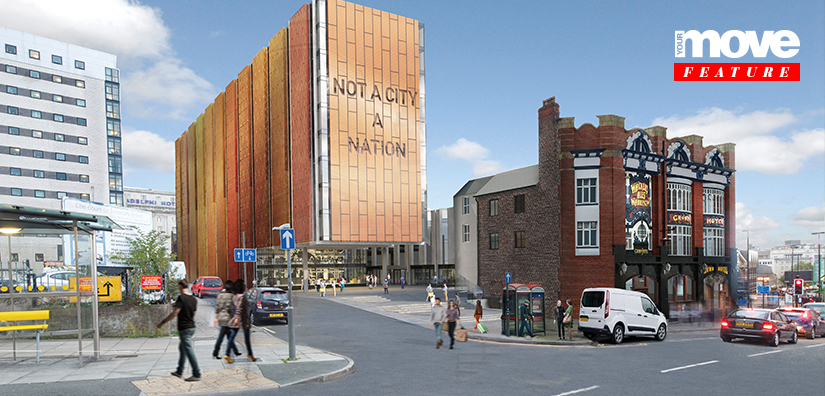
There is still capacity for further good quality student development, particularly in the city centre, and we see it as an aid for regeneration. The issues are about quality and, in particular, location. Our view is a concentration of student accommodation in and around the knowledge quarter is the real trick to this and it acts as regeneration itself. Lime Street, for example, is a regeneration scheme that has reasonably large element of student accommodation but has other uses as well so you end up with a mix of uses on the site.
The city centre has become more attractive. There’s a migration of students into the city from areas such as Smithdown Road where, historically, students went. So the question is almost about what happens with those areas? It’s about taking a step back looking at the best location for students but also looking at what happens in the areas that are less popular with students now?
One of the things we’re keen on is to make sure the student accommodation we’re developing is institutionally acceptable. Obviously there are a couple of models. One of which is individual sales of student units to individual investors which is a valid model but I think our preference is to get things which are owned by larger investors who can afford to maintain and keep standards up in the future.