


Liverpool’s new Everyman Theatre building has been awarded the UK’s most prestigious architecture prize during a special London ceremony.
The iconic Hope Street venue, which reopened earlier this year after being demolished and rebuilt at the same site, was presented with the coveted RIBA (Royal Institute of British Architects) Stirling Prize 2014 on Thursday (16 October) night.
Designed by architects Haworth Tompkins, the new incarnation of the theatre was competing against The Shard in London, Manchester School of Art, the Library of Birmingham, London Aquatics Centre and the London School of Economics – Saw Swee Hock Student Centre to be named building of the year.
On receiving the accolade at London’s RIBA headquarters, Everyman & Playhouse artistic director Gemma Bodinetz and executive director Deborah Aydon said: “We’re thrilled to have won this most prestigious of awards. The Everyman was built with humanity at its heart, an intent embodied by the 105 people of Liverpool on its façade. Since we reopened the warmth of feeling from the public to their much-loved Everyman – given a daring and brilliant rebirth from Haworth Tompkins – has been almost overwhelming. Haworth Tompkins have delivered us a building that is sustainable, technically first rate and with unparalleled levels of accessibility for a theatre. On a small site with many competing needs and technical necessities they overcame every challenge with zeal and imagination to create something which is a beautiful as it is functional.
“But most of all they have transformed a building that lacked so much into a building that embodies what the Everyman’s ethos has always been: world-class theatre in our auditorium, nurturing new writing, great food in convivial spaces, and somewhere for young people to dream of a future where nothing is impossible.”
RIBA judges described the building, which has replaced the original Everyman after it fell into a state of disrepair since opening in 1964, as “an extraordinary contribution to both theatre and the city, achieved through clever team working – client, architect, consultants and contractor – where the new truly celebrates the past.”
Related posts:
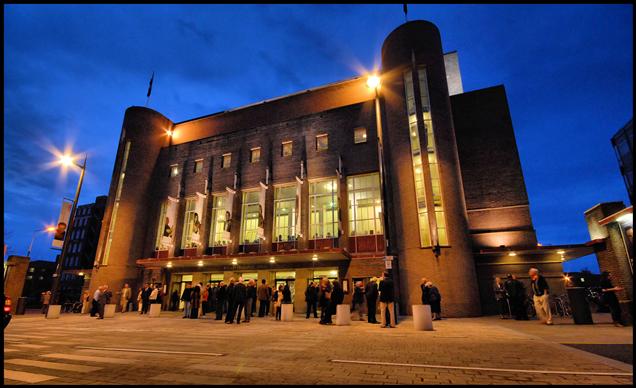 Liverpool Philharmonic set to open after refurbishment
 Plans revealed for Liverpool’s ‘epic’ Commonwealth Games opening ceremony
 Liverpool now supporting a UK Commonwealth Games
 Liverpool Cathedral celebrates £384,000 donation with hot air balloon lift
 Call for community-focused groups to take on new Market Place café
 New Baltic Triangle venue to bring ‘funk and soul party’ back to Liverpool


