

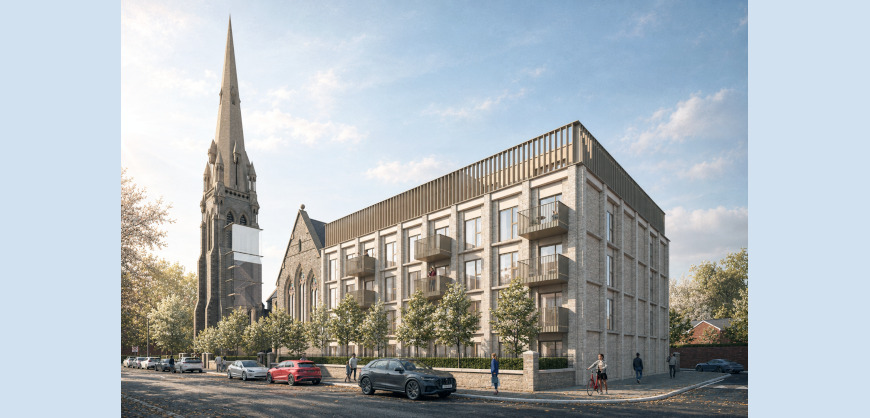
Emerging plans to regenerate the Welsh Church on Princes Road could secure the future of one of Toxteth’s best-known landmarks.
Applicant Audsley Holdings, which owns the Grade-II listed church, has spent approximately 18 months carrying out feasibility, design and consultation work aimed at identifying a viable long-term future for the building and surrounding site.
Commonly referred to as the ‘Welsh Church’ or ‘Toxteth Cathedral’, the Welsh Presbyterian Church was constructed between 1865 and 1867 to serve Toxteth’s growing Welsh population. It was designed by W & G Audsley, a Liverpool-based architectural practice founded by two Scottish brothers and built by Welsh craftsmen from Cardiff and Swansea.
The applicant has assembled a multidisciplinary professional team to explore how the church and wider site could be sensitively restored, adapted and brought back into sustainable use.
The local landmark has stood vacant and derelict for decades, suffering extensive weather damage and vandalism, with large sections of its roof lost and parts of the structure requiring stabilisation.
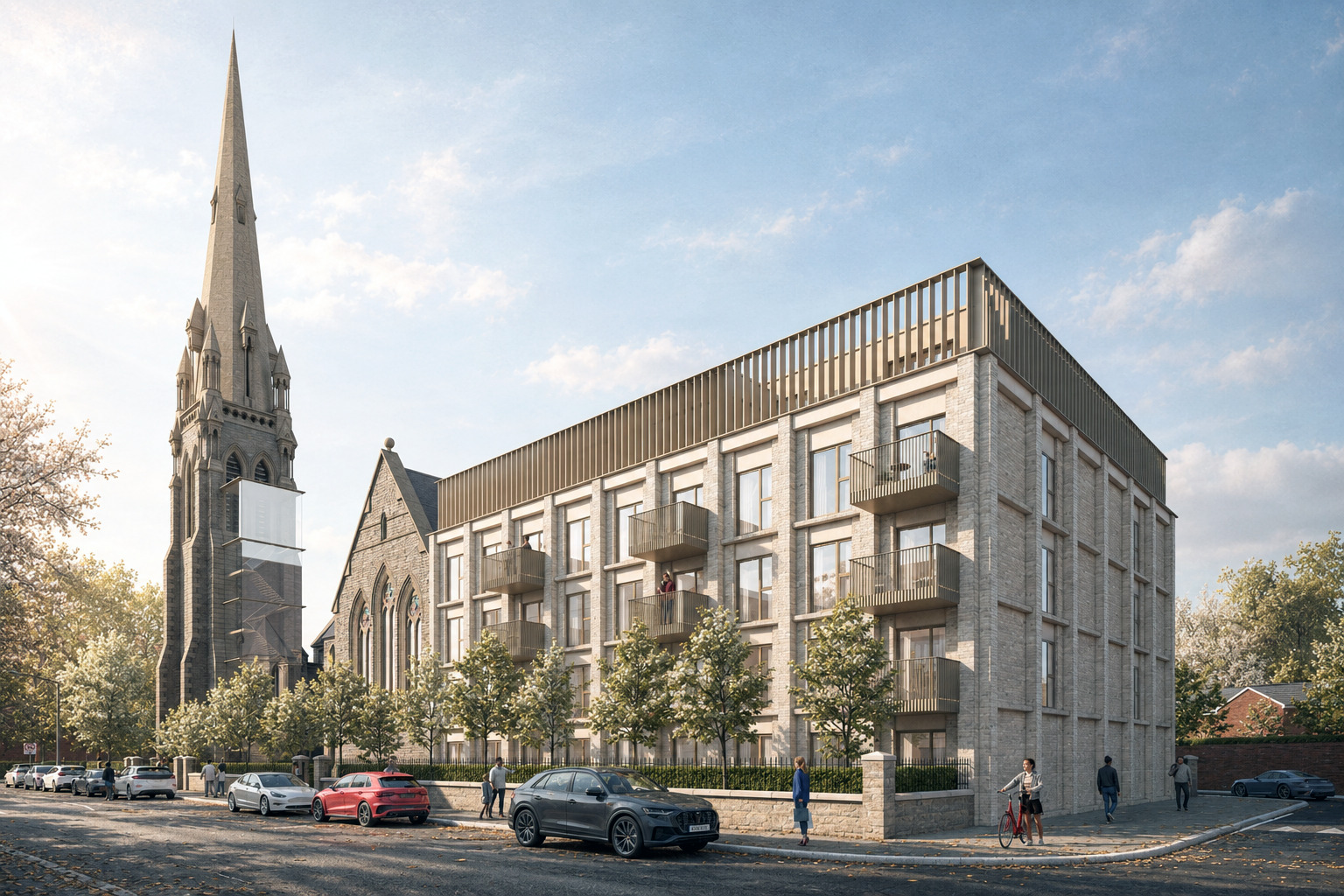
The emerging proposals from Audsley seek to retain, repair and sensitively adapt the church as part of a predominantly residential development designed to support the long-term regeneration of the site.
A range of complementary uses is also being explored, including a gym, visitor centre and café. The visitor centre would pay homage to the history and contribution of Liverpool’s Welsh community, introducing a public-facing element to the development alongside the proposed new homes.
Audsley Holdings and its consultancy team have already held informal discussions with Liverpool City Council about the future of the site and the principles behind the potential scheme.
A formal pre-application has now been submitted, building on those discussions and opening a more structured dialogue with the council before the plans are developed towards a future planning application.
The wider proposals include the conservation and repair of deteriorated elements of the church, improvements to accessibility, new landscaping and enhanced pedestrian movement through the site. Existing mature trees and the established character of the site are also being considered as part of the developing design.
At the heart of the proposals is the aim of securing a viable long-term future for one of Liverpool’s most recognisable historic buildings, with the wider scheme intended to help support its restoration and continued use.
Related posts:
 ‘Affordable’ new homes proposed for Belle Vale
 Important to ensure Festival Gardens vision is ‘achievable’
 Café and events space lined up in Baltic Triangle building redevelopment
 Plans to turn former Wirral Council building into student homes
 Exclusive Formby home wins prestigious regional award
 Lovell breaks ground at new affordable homes scheme in Moreton


