

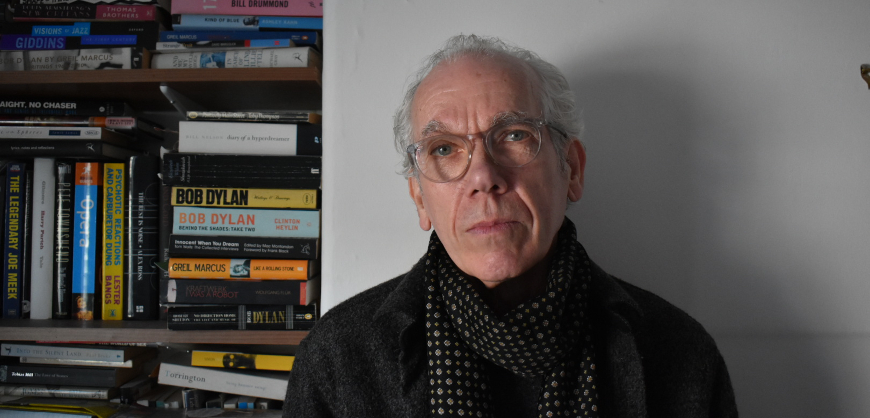
Wild Twin: In Conversation with Jeff Young
“There is something about a city of immigrants. All of those people that came over from Ireland generations ago; there is still the impulse in us to keep moving.”
Liverpool author and playwright Jeff Young on his new memoir Wild Twin, the positivity of nostalgia, and whether the great Liverpool novel is still to be written…
Words | Jack Poland
Meeting Jeff Young in the Philharmonic Pub almost feels too obvious. Jeff brings buildings to life in his writing by augmenting them with shadows of the past. So as I sit in one of the mahogany-panelled rooms, waiting for him to arrive having recently finished his latest book, it’s hard not to look around and wonder just how many former punters I’m drinking my coffee with. We’re here to discuss Wild Twin, the follow-up to his brilliant memoir Ghost Town which was shortlisted for the Costa and Portico prizes.
Wild Twin follows Jeff in his 20s as he leaves his childhood home in Liverpool for Paris, Ostend, Amsterdam and anywhere else he can become ‘invisible’ – or find his ‘wild twin’. Fifty years later he is back in the home he left, caring for his father. It is an absorbing reflection on time and memory and the effect they both have on us.
The great Liverpool filmmaker Terence Davies said: “We love the place we hate, then hate the place we love. We leave the place we love,then spend a lifetime trying to regain it”. There is no suggestion that Jeff has anything but a deep love for the place he left, back in the 1970s. What I’m interested in exploring with him however is the idea of trying to regain the past, and the places, even as we try to get further away.
In the first half of the book, when Jeff gets on the road, he is undeniably homesick – ‘all I can think about is Liverpool’ – yet liberated – ‘I’ve never been so alone, so anonymous, so free’. I ask him about this dualism and whether there is something about this city that cultivates it. “[It] is one of those cities that has a particular kind of mythology about it,” he says. “I think there’s something about the makeup of the people in the city; the Irish and the Welsh, Lancashire and Afro-Caribbean communities coming together. They all bring their dynamic vitalities to the place that give it a particular kind of energy. That’s irresistible.”
And what about the yearning to travel? “There is something about a city of immigrants. All of those people that came over from Ireland generations ago; there is still the impulse in us to keep moving.” Somehow Jeff manages to explore the notion of memory and time gone by without adding any glaze of nostalgia. He floats above sentimentality. Even in a passage in which he recounts the ‘charade’ and ‘mess’ of his education, he isn’t cloying.
In fact, he follows it with a litany of happy memories from his home-life. Time bends in Jeff’s writing, it folds in on itself. Happy memories are pasted over unhappy ones and there is a power in this. Jeff explains further: “I don’t think of time as a linear thing, it’s not chronological. It’s layered and overlapping. Nostalgia is, to me, not a negative. I’ve been thinking about radical nostalgia and radical nostalgia is using all the power, potency and energy of the past to reinvigorate the present.”
This leads us on to the topic of the recent riots around the country, including Liverpool and in particular the destruction of Spellow Library and Hub.
“[That] was my childhood library. It was obviously devastating. I remember going there with my mum after school.
“[But] you can override the destructive moment by reshaping it with the idea that good things happened there. That’s more powerful than that destructive impulse.”
The immediate community response and generosity in a GoFundMe campaign following the unrest would appear to support this idea.
Jeff’s positivity matches his demeanour as he sits opposite me. He laughs easily and is entertaining company. Face-to-face interviews like this are rarer these days and I get the impression that, like me, he is enjoying a quiet chat in a quiet pub. Wild Twin is full of small moments of intimacy. Don’t expect wild trysts or heroism. What you get is, like our own day-to-day memories, fleeting remnants. Those echoes of the past that never leave us. Like the time he ‘put a domino in his mouth and kept it there for hours’ or ‘kept two frogs in a Pyrex bowl but felt sorry for them so set them free’.
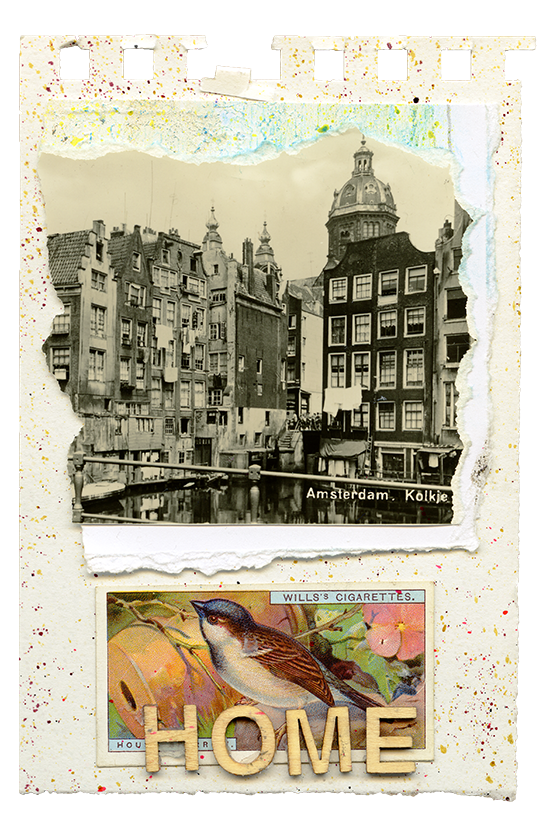
Even in the chapters that take place in Amsterdam, a time when Jeff was surrounded by a myriad of larger-than-life characters that could fill a hundred books, there is nothing bombastic about it. It’s close and real. Tony Soprano said that if we are lucky we will ‘remember the little moments, like this, that were good’. It is these little moments that make Wild Twin such a treasure. Jeff, in all of his writing, shines a spotlight on the people and places that have fallen between the cracks – ‘the light shining on the overlooked’. His memories, it would seem, work in the same way. The narrative often dwells in a shifting dreamscape; the instability of memory underpins much of it.
Yet, there are moments when the elasticity of the timeline shudders to a halt and we linger, for just a second longer, on a memory of such raw lucidity that it takes you aback. Jeff’s memory of his sister’s dying moments is so tangible that all of a sudden I wonder if memory is not, after all, peripheral but the most precious thing we possess.
In the final pages, he is back at his childhood home, now in his 60s, looking after his father who has Alzheimer’s. The great American writer Paul Auster once said, when talking about his novel The Invention of Solitude, a meditation on the death of his father, that he ‘had to write about him or else he would disappear’. I ask Jeff about what his thoughts are on memory now after caring for a father who could no longer remember and after writing this book.
Is it just an index of fragmented life episodes or is it all that we are? “It’s not that [my dad] had lost his memory or it had been deleted, it was that he couldn’t find it. It was in there somewhere and you could see him almost physically struggling to find it. And so, without that repository, who was he? He didn’t know who he was anymore. 90 years of life had gone somewhere. He’d gone. In that sense, our memory must be who we are.”
Jeff can trace his near four decades of writing back to the period of his life documented in Wild Twin, particularly in Amsterdam.
“I was kind of posturing as a writer when I lived there,” he tells me. “My girlfriend at the time was happy to keep travelling but because I had started writing bits of pieces I thought ‘I think I want to do this’ and I felt I had to come home. I came back and we were living on Faulkner Square and I just started writing about the people.”
In a stroke of serendipity but also a comment on the thriving creative buzz in Liverpool at this time, Jeff was encouraged to write a script for a lunchtime theatre show.
“You could go and have a pie and a pint and watch a play. Loads of people came through that. You could put a play on really cheaply in a pub. It was a 50-minute play so people could get back to work.
“I passed the script on and they ended up producing It. This was within six months of being back in town.”
And so began a career of writing plays, screenplays and teaching creative writing at Liverpool John Moores University.
One topic I wanted to touch on with Jeff, both because he was a writer from the city and also so well versed in the artistic tapestry that runs through it, was whether the great Liverpool novel had yet been written. Is Liverpool’s James Joyce still out there?
“I had a conversation with Peter O’Halligan (poet and artist who set up the Liverpool School of Language, Music, Dream and Pun on Mathew Street in the 1980s) about this recently and he was comparing and contrasting Liverpool to Dublin – the amount of authors, playwrights, novelists that come out of Dublin and keep coming – and he was saying ‘where are Liverpool’s’? In Ghost Town I write about James Hanley who wrote The Furys (a 1935 novel set in Liverpool) and that is probably as close as we got.”
“Peter said culturally and historically the big monolithic thing is The Beatles. The Beatles probably are Liverpool’s James Joyce. In terms of the novel, Peter said something along the lines of ‘Liverpool is yet to find its Joyce or Becket and maybe one day when it does, it will be healed’. So, the dream of Liverpool, the imaginative realm of Liverpool still hasn’t found its Ulysses.”
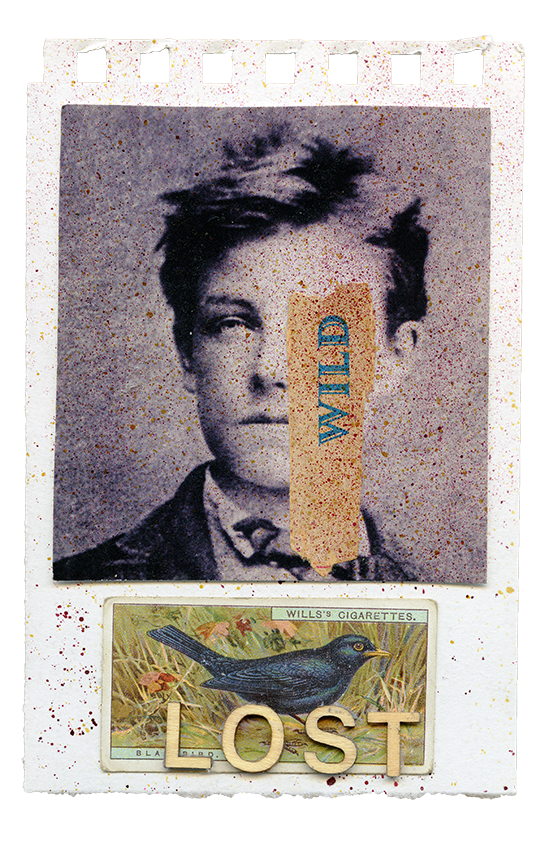
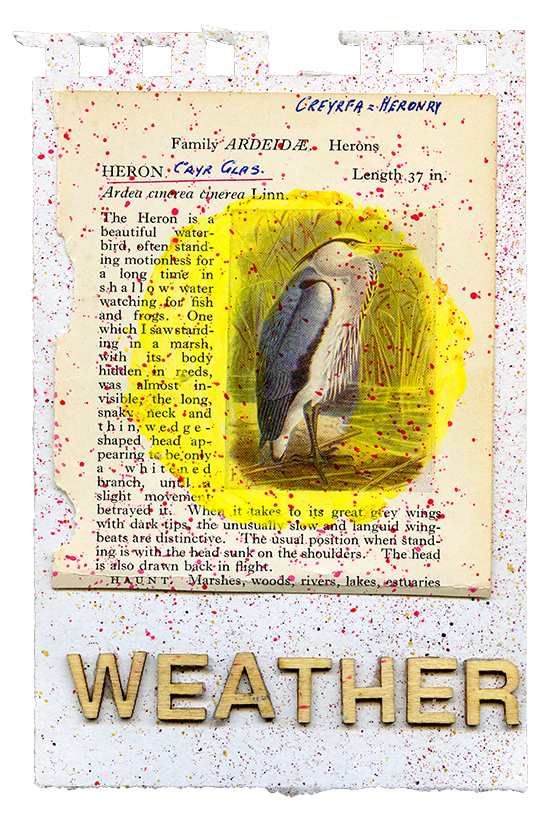
Jeff is also a collage artist and you can see similarities in the depth of his writing. There is always more going on within the frame. It’s textured. What he does so well with this is reflect how our minds work in the act of recall. No sooner does a thought get presented to us before it detonates and reveals the shattered glass of the past.
Many compliments will rightly go Jeff’s way for this book. If I could offer just one of my own, it would be this: it changed how I regarded the city I have called home for 35 years.
I defy anyone to read Jeff describe Liverpool as a ‘memory archive of the lost, a future archive of tomorrow’, and not be inclined to glance down the forgotten streets and savour the characters on your next walk through town; to see the flickering ghosts of the past on street corners and standing at bars.
“Wild Twin weirdly is a book about Liverpool despite the fact that it’s often talking about Amsterdam and Paris and places in between,” Jeff tells me. “It’s actually about this city because I can’t get away from it. The city is far from perfect. It is a traumatised chaotic mess of a city but if you are remotely of a romantic inclination,” he says, leaning forward, “you see that it is a city with soul and of so many souls.” After reading Wild Twin, you’d be hard pressed to disagree.
Wild Twin by Jeff Young is published by Little Toller
Related posts:
 Boxing world champion Liam Smith talks to Your Move
 Award scheme seeks Liverpool grassroots music talent
 City-wide book giveaway event for families
 Red Dwarf XI: Co-creator discusses new series and his time in Liverpool
 The Interview: Woolton artist Paul Curtis talks to YM Liverpool
 Paul Kappa interview: Veteran Liverpool performer on future of city’s live music scene


