From exhibitions exploring the work of international icons, to prestigious awards and an ever growing calendar of creative events, it seems that now more than ever the eyes of the art world are firmly on Liverpool’s buzzing scene. the city has long been renowned as a thriving hub for art though, and with this in mind we take a look at how galleries and organisations across the area have been acting as a magnet for the cultural spotlight, whilst paving the way for emerging talent.
In recent weeks alone, Liverpool’s major gallery spaces have become somewhat of a who’s who of renowned 20th Century artists, as new exhibitions and more permanent works have been installed.
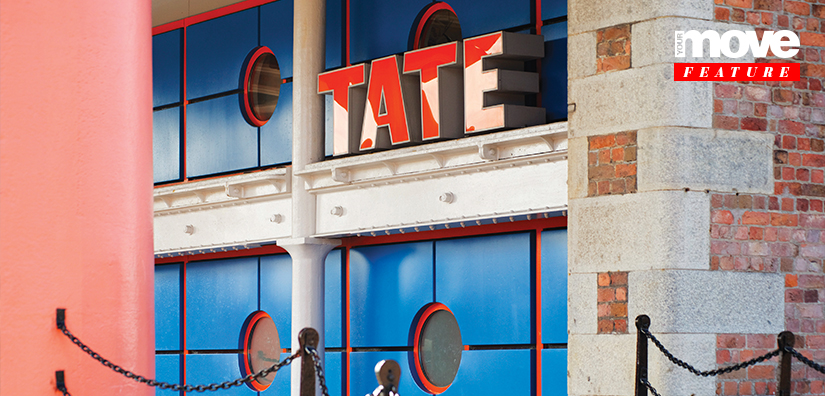
Tate Liverpool welcomed the arrival of its landmark look at Jackson Pollock’s ‘black pourings’, while the Walker Art
Gallery has just unveiled ‘REALITY: Modern and Contemporary British Painting’ – a celebration of some of the most influential painters of the past six decades.
And as if showcasing works by the likes of Lucian Freud, LS Lowry and David Hockney isn’t enough, the venue has
also made room to host a drawing by Pablo Picasso, which has been gifted to National Museums Liverpool by Arts Council England as part of the Acceptance in Lieu scheme.
Entitled ‘Study for Temptation of St Anthony’ (1909) and formerly owned by Lucian Freud, the drawing went
on display on 14 July as part of the gallery’s new ‘Picasso on Paper’ showcase.
For the Walker in particular, exhibitions featuring high profile artists often sit on the programme alongside events
that recognise emerging artists and what’s important in British painting today, such as the prestigious John Moores Painting Prize.
“We’re extremely fortunate in Liverpool to have such a vibrant arts scene, and the Walker Art Gallery – which has
supported contemporary art since it opened in 1877 – is very much at its centre,” says Ann Bukantas, head of fine art at
National Museums Liverpool. “In hosting the John Moores Painting Prize, now in its 59th year, the Walker has long had
its finger on the pulse of contemporary art, championing emerging artists as well as those who are more established in
their careers.
“Our current temporary exhibition, REALITY: Modern and Contemporary British Painting, is a prime example of
why the arts scene here is thriving, and why there is a real buzz about Liverpool. As well as looking back at iconic
artists such as Sickert, Lowry, Freud and Hockney, the exhibition is a wonderful showcase of contemporary painting
in Britain today.”
Meanwhile Tate Liverpool’s current attention grabbing Jackson Pollock display is the latest in a line of art attractions which have brought internationally renowned names not only to the city but to the North West for the first time, once
again reaffirming Liverpool’s prominent position on the cultural map.
“Since Tate Liverpool opened in 1988 we have been at the heart of positive change in the city,” explains Andrea Nixon,
executive director at Tate Liverpool. “We are home to the national collection of modern and contemporary art in the
north of England and play a crucial role in the success of the city region. We have a history of staging pioneering and world-class exhibitions that bring major artists to the North West for the first time including Andy Warhol, Marc
Chagall, Piet Mondrian and our latest exhibition Jackson Pollock: Blind Spots which will tour internationally.”
But for such large organisations, it’s not all about the headlining exhibitions. For instance, Tate is a key player in
a network of art institutions across the city and regularly fulfils a role in city-wide events, whilst also showing support
for new talent.

“From joint programming with institutions such as FACT and Liverpool Biennial we also have close partnerships with academic institutions including Liverpool John Moores University, Edge Hill University and Hope University in order to support young creative and artistic talent in the region ensuring the Liverpool arts scene continues to thrive,” adds
Andrea.
Meanwhile another Liverpool gallery which has which has long had a reputation for providing a platform for new artists is Bluecoat, where gallery spaces sit alongside studios and exhibitions take visitors away from more familiar, highly influential names to explore the “new and experimental”.
“Liverpool has held its own as a visual arts destination, especially since Capital of Culture, though of course a contributing factor in getting that accolade was the vibrant scene already here, which has deep roots,” according
to Bryan Biggs, artistic director at Bluecoat.
“There have, for instance, been artists working in studios at the Bluecoat since 1907! For the last century or so we have nurtured emerging artists, both in our studios and in exhibitions, often at an early stage in their career (including several Turner Prize winners). Our new exhibition, Resource, continues that support, while literally providing a set of
resources for visitors. And local audiences’ appetite for the new and experimental is also part of Liverpool’s reputation as an art city.
“To stay competitive, though, we need to increase the number and quality of our working artists and develop our production base, helping create a visual arts ecology where higher education, artistic practice, critical
discourse and galleries feed off each other more. Importantly we need people to buy art.”
Outlets to purchase art are seemingly another area of the city’s scene which is currently on the rise. For instance Liverpool Art Fair, which is developed by dot-art and held its 2015 event in May, has been growing since 2012 and is now a popular fixture on the North West’s calendar as it allows around 100 artists to showcase work for sale. Whilst in June, the second Liverpool Contemporary Arts Fair took place, bringing work from British and international galleries and showcasing both emerging and established artists.
Held within the landmark Royal Liver Building, the event offered an opportunity to view and buy art, and also drew further interest with its display of an exclusive collection by L.S. Lowry worth over £3 million.
Venues & Collectives
As the city’s big name organisations are continuing to attract the crowds by shining a spotlight on some of the most influential artists, Liverpool is also seeing artist-led collectives and venues continue to grow and evolve.
Ellie Barrett, a current director of The Royal Standard – an artist-led gallery, studios and social workspace located within a large industrial northern docklands space, having originally formed in a former Toxteth pub in
2006 – believes such groups are “more responsive to change and emerging theory and aesthetic”.
The Royal Standard itself has not only been undergoing some of its biggest developments to date in 2015, having secured charitable status which will “open many doors” and hosted its “largest and most ambitious project” so far
with BamBamBam – an event which saw 21 studio members show work in as many days – but it is also seeing members embark on their own studio and gallery space ventures in the city.
As Ellie points out, one collection of Royal Standard artists set about putting together a space named Crown Building Studios earlier this year having “identified a lack of smaller, more emerging spaces,” and a trio of members
attracted a buzz in late 2014 when they launched a pop-up space.
With “exciting and active practice at the foreground”, Ellie says Liverpool is “an excellent city to be an artist at any point in their career”.
Related posts:
 Winning John Moores Painting Prize artwork to go on display
 Liverpool cultural organisations bring £27m boost to city
 Liverpool 2018 celebrations promise ‘incredible time’ for city
 60th John Moores Painting Prize exhibition announced
 Five shortlisted John Moores Painting Prize artworks revealed
 Gay Times to celebrate LGBTQ+ community with major Liverpool event