


Patrick Kielty interview
Patrick Kielty is heading to Liverpool in May as part of his first UK stand-up tour since 2015. Borderline sees him return to his satirical roots with a personal take on national identity and the future of the Union in a post-Brexit landscape
Words | Lawrence Saunders
Before we get to Brexit and Northern Ireland, let’s start with the most important question. Why are you a Manchester United fan?
I have a wee theory about this. If you grew up in Northern Ireland (NI) in the 1970s, there were no cheap flights and no Belfast City Airport. There was only the boat, and the boat went to two places – Liverpool and Scotland. That’s why most people my age in NI are either Celtic or Rangers, or Liverpool or Manchester United. I had two older cousins who were United fans and of course, there was the George Best connection.
I was born in 1971, and the first football match I remember is the ’77 FA Cup final when Jimmy Case scored for Liverpool and United won 2-1.
You’re probably too young to remember all of this. Essentially what happened is I grew up in NI when Man United were s**t and Liverpool were winning everything, right? And now I’m back on tour doing a show about growing up in NI and Man United are s**t and Liverpool are winning everything! What goes around comes around!
Do you have any particular memories of performing in Liverpool?
I play a fair bit in Liverpool but what’s funny is I’ve actually been in Liverpool way more than I’ve actually played in it recently.
I’ve got the two kids here and we still have a house in County Down. During the pandemic, we rented a camper van two or three times and drove up to Birkenhead to catch the overnight ferry into Belfast.
The kids enjoyed the travelling so much, that now when I ask them if they want to go to County Down they don’t want to get on a plane! One of the weird things about Brexit is that they’ve put on all these new flashy boats from Liverpool to Belfast.
All of the truckers who were doing Holyhead to Dublin are now doing Liverpool to Belfast because there’s not as much paperwork. So we got this lovely cabin – it’s not what it used to be like!
You featured in two acclaimed documentaries related to NI and The Troubles. The subject matter of both is somewhat of a departure from your previous work. How did this new chapter of your career come about?
It came about because it was 20 years since the Good Friday Agreement and the BBC asked me would I like to take a look back at what was going on there.
I was a bit reluctant, on the basis that… what’s the best way of putting this? Me da’ was killed [during The Troubles] and there were a lot of other people over here that were killed as well. Everybody [in NI] kind of went through the same thing, or they knew somebody who did, so I didn’t want to be the luvvie on the TV bleating on about me da’ being killed and people back home going: ‘Yeah, we all went through that – what makes you so special?’. So I didn’t really want to talk about it.
Then the other thing, which is sort of weird, is because NI for so long was such a bad news story for the rest of the UK, I always had the sense that nobody else really wanted to hear a story about NI either.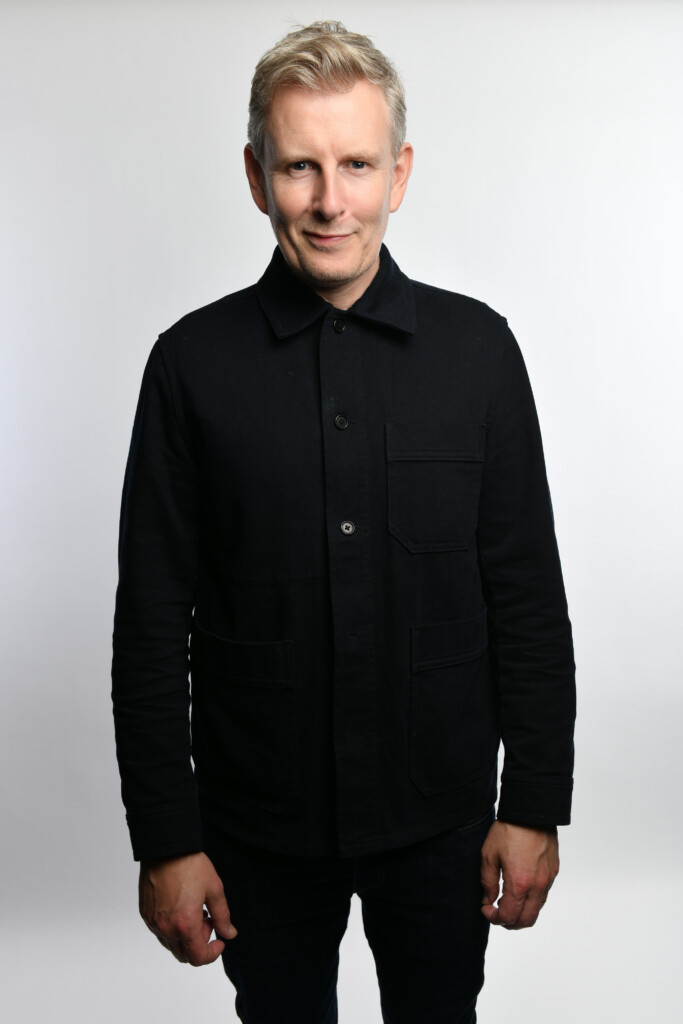
But then this [BBC] guy from London said: ‘Let’s put it another way – if you were from another country and your country had made peace and you were someone who’d actually lost someone and had a bit of skin in the game, would you watch that documentary?’ And I said: ‘Yeah, I would’.
The first documentary (My Dad, the Peace Deal and Me) gave me the confidence that people maybe wanted to hear it, and then it won a couple of awards and got nominated for a BAFTA, and then they asked me to do another one last year, about 100 years of NI.
I was up in Liverpool doing a gig a week after that documentary went out last year. Coming back down to London on the train, we stopped at Crewe or Stoke. This guy tapped me on the shoulder and stuck a note in front of me. When I turned around he was gone and off the train.
The note just said: ‘Look, I’m not from NI and I know nothing about it, but I watched your documentary and when people tell the truth about who they are and how they feel, it helps other people’. I was like: ‘Whoa, okay’.
It was a lovely morning, everybody was out and about and I was sitting there kind of gurning out of the window! People were probably thinking I’d had a bad night on the drink.
Weirdly, those documentaries helped when it came to formulating what I wanted this new [stand-up] show to be about. They gave me the confidence to want to stand on stage and talk about how I grew up and what my life was like, and you know, how we made peace here.
I always had the sense that nobody really wanted to hear a story about Northern Ireland.
I feel the world is becoming more polarised and people are kind of only seeing one side of an argument or another. They’re not really meeting on anything in the middle ground.
You know, we lived in America for a while… Trump and fake news and Republican and Democrat and Brexit and Remainer – all this stuff that nobody changes their mind on. They just sort of have their own opinion.
When you’ve grown up in a place where not seeing the other side really made things pretty s**t, then, you know, it kind of felt like the right time to maybe do something on stage where you’re going: ‘Actually, sometimes what you think is the truth about yourself and other people, maybe isn’t’. That’s kind of the heart of the show.
You’re talking about quite heavy topics here. Were you worried that it wouldn’t translate well into a stand-up routine?
I think the best satire normally is talking about fairly heavy stuff. What’s interesting for me is when you look at what’s going on in Ukraine at the moment, The News Quiz, which reflects the week’s news on Radio 4, was still on this week.
Of course, you never do jokes about the horrible things that are happening, you do jokes about the circumstances and the hypocrisy that leads to it.
When I was starting out, and there were horrible things happening here in NI, I was doing jokes about the circumstances and political decisions behind it all. People have an appetite for that. It’s interesting to see how NI has completely shed its skin, and how 90% of the people are heading in a different direction, and then, to be living in England, in a place that really didn’t live through the very worst of what the worst kind of nationalism can bring.
We like to have little labels for people; he’s a Manc, he’s a Scouser, he’s a Paddy, he’s a Jock. By labelling other people, we think we know where we stand with them. ‘Don’t tell me about yourself, I know who you are’. That was something that we used to specialise in here (NI).
Everybody’s different; it’s not about nationality, it’s not about identity.
Brexit is a big topic in your new show. Do you take a point of view on it either way? Or is it not possible to do that on stage?
All you can do is tell your truth, right? If you’re from NI, and you actually see the pain, you see the hassle [Brexit] has caused, I think you have to get on stage and talk about it. About how this caused this, and how that was quite funny, and how that was quite stupid, and how this is happening.
It’s not a lecture. It’s not some type of pious thing, you know: ‘I’m right, you’re wrong’, but when you make decisions, sometimes there are other consequences, and once you know all the consequences, then, you know, you might still decide to support that, or you might not.
Away from stand-up, you’re starring in a new film which finished filming last year called ‘Ballywalter’. Could you tell us a bit about the project?
This thing came out of the blue. I had done a play on the West End years ago but I hadn’t screen acted before. The guy who’s producing it, James Bierman, whose a massive Liverpool FC fan, came to me with the idea.
Seána Kerslake, a great young Irish actress, plays the role of Eileen and I play this older guy, Shane. Eileen’s life is falling apart in England, and she’s back driving a taxi in Belfast. My character has split up with his wife and he’s hiding out in a bedsit in this little seaside village of Ballywalter. She ends up being his regular taxi driver and it’s the story of whether or not the two of them can maybe help put each other back together again.
Until it comes out on a 60” x 40” screen, and I have to hide behind the chair when I see myself up there, it was one of the best things I’ve ever done! It looks like it’s going to some of the film festivals this summer, with a cinema release maybe in the autumn.
I really enjoyed making it. You just never know what curveballs life is going to throw at you… some of them are really nice!
Borderline comes to The Epstein Theatre on 21 May. For tickets: mickperrin.com
IMAGES Ⓒ STEVE ULLATHORNE
Related posts:
 Dylan Moran interview: Irish comedian chats to YM ahead of Liverpool show
 Call for theatregoers’ stories of Royal Court’s past
 What’s on in Liverpool: 14-27 October 2016
 Thousands gather for Christmas lights switch-on
 Top 7 things to do in Liverpool this season
 First public art show by Andrew Marr to open in Liverpool


