Mother Nature’s Son
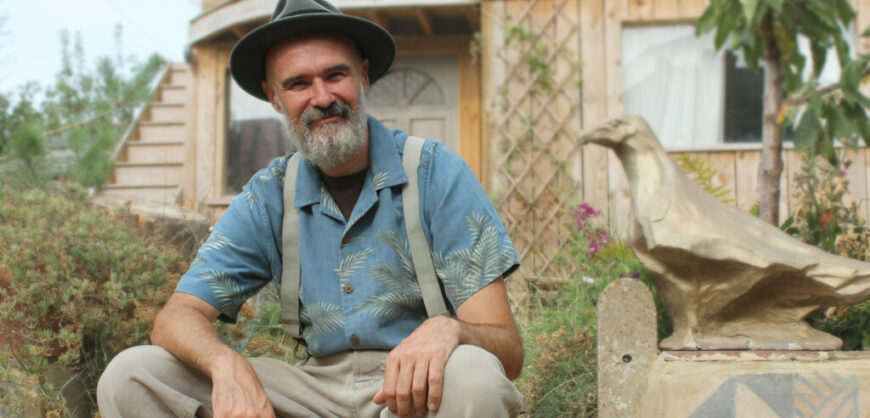
Joel Bird is a Liverpool-born artist, designer/maker, author and musician who recently starred in BBC2’s ‘Your Garden Made Perfect’, helping homeowners make the most of their outdoor spaces with ingenious low cost solutions.
We caught up with him to discuss his Liverpool roots, obsession with sustainability, and why sitting in your garden is one of the ‘most valuable things a human can do for themselves’.
Words Lawrence Saunders
Whereabouts in Liverpool did you grow up?
I grew up in Walton. When I was 12 or 13, we moved south – to Calderstones. As an adult, I lived in the Smithdown/Toxteth area for a while, before I headed to London.
We grew up with a tiny paved back yard. But you don’t know when you’re a kid what things are supposed to be like – you just enjoy it. Every year until I was 15, we’d go to a campsite in Thurstaston on the Wirral during the summer holidays.
When I look back, those experiences completely shaped me. It instilled in me a passion for nature. When I came back, I noticed that the other ‘city kids’ didn’t know about insects, birds and plants.
I think it’s really important for kids to get out. It doesn’t need to be much. We thought we were going on a big holiday but it was only over the water!
Why did you move to London?
I was in my late twenties when I moved to London. I was an artist and a musician so I had the idea that there would be opportunities for me down here. I wanted a bit of a change as well.
I was always in bands in Liverpool and I was still playing music and doing art shows when I could in London but I needed to earn money because that’s what you do in London, otherwise you have to come home again.
I always had a couple of jobs – working in a bar and labouring. That’s how it is when you move from the north and you’re trying to be an artist of some description. They’re the type of jobs which are open to you.
How did you go from an aspiring artist/musician to a shed maker?
I was labouring on loft conversions. That taught me the structural side of things because you have to understand forces when you’re building lofts. I started a business making garden sheds for people. [Building sheds] is quite similar to building a dormer really. I was quite good with wood because I’d done sculpture and was used to working with my hands.
Inevitably people started asking “what should I do with this part of my garden?”, so I would often design a little space in front of the shed for people. I sort of became a ‘small spaces expert’ in my own way.
I always did things on a budget because that’s how I’d always lived in London. Even though I spent the majority of my money on rent, I’d always manage to do bits of gardening because it made me happy.
I’ve never had any formal [building] training or education. It’s an unusual route because a lot of garden designers have gone through that process but there’s pros and cons to everything. My path means I understand budgets and how things are made, instead of just the theory.
Bespoke cabins and luxury outdoor buildings have become increasingly popular during lockdown but is it possible to transform your garden without spending a fortune?
If you’ve got money, I think you should spend it on your garden and outdoor buildings because they make you happy. Gardens have brought me much more joy than fancy cars. I’ve probably gardened most when I’ve been at my poorest.
There’s always something you can do [in your garden]. If you can create a little seating area with plants around it – I really think that’s one of the most valuable things a human can do for themselves. You can literally just put a couple of logs down and a blank of wood. You can propagate your own plants if you need to. Sit on your own, in a bit of peace, and start to connect with nature. That’s my philosophy.
Although I’m designing gardens which look nice, at the back of my mind I’m thinking “how am I going to get this person into their garden”, and I nearly always start with a seat. Connecting with nature is at the root of everything. You don’t need money to garden.
One of the best things from the lockdown was a lot of my friends starting growing their own and that’s a really good way into gardening. Just get a little raised bed going.
Speaking of positive things to come out of lockdown. A recent survey found that the pandemic has made many Britons re- evaluate how sustainable their lives are. Being sustainable is a big thing for you isn’t it?
Absolutely. It’s a funny one for me because [sustainability] is something I’ve been obsessed with 30 years. I’m always trying to come at it from a sensible point of view and not sound too militant. I try to buy clothes that I think will last and that I can repair. My style is also practical. I wear braces because it takes the pressure off my back. People online were calling me a hipster for the way I dress, which is fine, but there’s a practical reason for it as well.
How did you get involved with ‘Your Garden Made Perfect’?
The makers of the show just contacted me. I went through a process with producers and got further and further down the line, and in the end they chose me. I think probably [they chose me] because they could see I could get the jobs done.
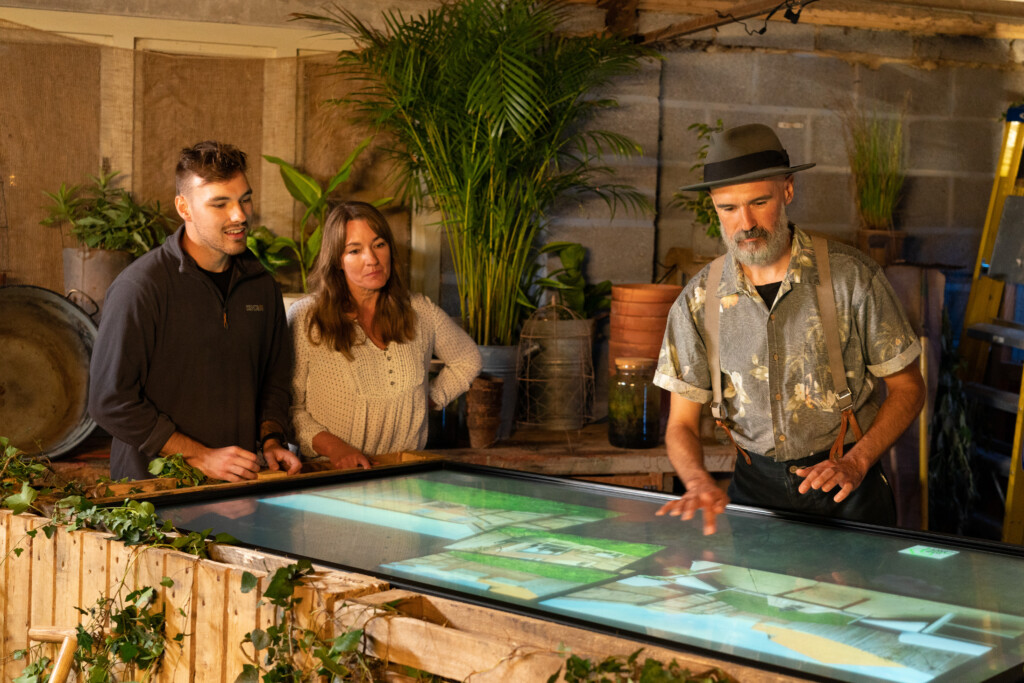
It was a little bit nerve-racking because they threw me in that room with Angela Scanlon, about six cameras and all the crew. It’s not something I’d ever done before – which is why I look so wired! Someone tweeted after the show, ‘intense scouse budget garden dude is my spirit animal’, which made me laugh! I do look intense and I am intense, but most scousers have an intense way about themselves without realising it.
Episode five of ‘Your Garden’ saw you transform a tiny back yard in Aigburth into a Mexican-themed courtyard. Believe it or not that was in fact my old back garden!
Isn’t that amazing! Unbelievable! A lot of people paint places white because they think that’s going to increase the light through reflection but there wasn’t any light in that back garden! You’re better just injecting some colour because you’ll perceive that as a warmer space. You’re almost righting the light off and admitting that you’re not getting any and then trying to make it as happy and joyous as you can with colour.
It worked for Beth and Joe (homeowners) – they were made up. It’s not like they have to spend all of their time out there but if they can pop out and have friends round for a drink, then it’s become a space worth having hasn’t it?

Do you think the show will be coming back for another series?
I think it will because the ratings were so high – two million at one point. [Two million] is a sort of litmus mark for the BBC. There’s a good chance they will get those figures again. I’m filming something right now but they don’t want me to tell anyone about it.
What tips would you give to homeowners who want to make changes to their gardens ahead of the summer?
Like I said, I always start with a nice place to sit. I always look to see where the sun hits at a particular time of day and put the seating area there. The motivation is to get people into their gardens. I often tell people not to worry too much. The world of gardening can be a little bit intimidating. If you can get down to a garden centre, you can look at the labels and ask the staff. If that particular plant you buy doesn’t survive, it’s not the end of the world – try and learn from it.
I always come at any project from the nature perspective, rather than the garden design perspective. Ultimately, it’s about connecting with nature and nurturing these plants because that’s what really makes us happy – not these big garden makeovers.
Do you still paint and write music?
I always class myself as an artist and a musician even though that’s not where the money comes from. I’m always writing [music] and I still have art exhibitions.
I split the year in half. I do a build season through the summer, and then when the winter comes, I sort of shut down and choose a creative project. For example, two years ago I wrote a book and this year it was painting over the winter. People want me to write another book but I don’t know if I’m going to yet. I’ll wait for the right thing to come along.
I’ve got an agent and all of that now, so I’ve got to decide how deep in I want to get. I’m hoping to keep my life pretty similar. Probably do one show a year, keep my garden business going and that winter art project.
Trying to balance what you like doing and what brings the money in – I think that’s a lesson for everyone. You don’t have to always drive the system.
The first series of ‘Your Garden Made Perfect’ is available to view now on BBC iPlayer
Related posts:
 Recruitment underway for Emerging Artists Programme
 Award scheme seeks Liverpool grassroots music talent
 Over 500 Help To Buy mortgages completed in Liverpool
 Charity concerts to mark the Cavern Club’s 60th anniversary
 Street dance performances to mark Valentine’s Day
 Poetry recitals to mark ‘The Mersey Sound’ anniversary