Beyond Rioja…
Jon Atkinson examines offerings from some of Spain’s lesser-known wine regions
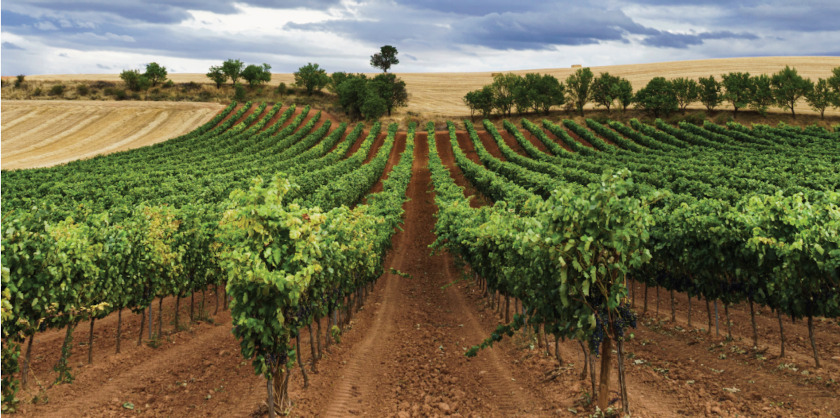
WHEN CONSIDERING SPANISH WINES, Rioja inevitably dominates the conversation, and understandably so. Rioja has been described as the locomotive that pulls the Spanish wine ‘train’ with other regions somewhat hanging on to its coattails! In the UK, the dominance of Rioja makes it difficult for other Spanish wine regions to gain much of a foothold in the market.
The quality and diversity of wines coming out of Spain has never been higher, however, from both indigenous and ‘international’ varieties. Spain has a well-established wine-producing heritage coupled with a vast vineyard area featuring a high proportion of old vines with younger generations of ‘well-travelled’ winemakers always keen to experiment.
Climate and topography give Spain a distinct advantage, with ample sunshine hours to ripen grapes but with most inland vineyards at high altitudes, the grapes don’t ripen too quickly meaning better quality fruit with just the right balance of sugar and acidity. Those not at high altitudes tend to be coastal, so the cooling influence comes from the Mediterranean or the Atlantic.
Here are four ‘alternative’ Spanish wines I think you should try…
Attis ‘Xión’ Rías Baixas Albariño 2021
Found on Galicia’s Atlantic coastline, the Rías Baixas is an intriguing DO made up of five individual sub-zones; Val do Salnés, O Rosal, Condado de Tea, Soutomaior and Ribera de Ulla. Although some red wines are produced here, they are very niche with the Albariño whites being what the region is best known for.
Established by two brothers, Robustiano and Baldomero Fariña – Attis’s boutique estate is in the village of Meaño near Pontevedra. Their winemaking philosophy is summed up in three words: authentic, artisanal and Atlantic!
This is a crisp, refreshing dry white with subtle peach/stonefruit characteristics that pairs brilliantly with shellfish/seafood. Arguably the most sought-after Spanish white, Albariño has long been fashionable in the wine bars of Madrid and Barcelona and has seen a noticeable upturn in the UK over the last several years. £18.95
Viore Rueda Verdejo 2022
Rueda is an oasis of white wine production in Castilla y León, a part of north-western Spain dominated by reds. Situated some 65 miles northwest of Madrid, it neighbours Toro, Ribera del Duero and Cigales.
The local Verdejo grape is widely grown and is synonymous with Rueda, but Sauvignon Blanc is becoming increasingly popular. The relatively high altitude and continental climate create an environment that most crops would perish in, but the vine thrives under such adversity with its roots running deep into the ground to seek out water.
This splendid example is 100% Verdejo, produced by Bodegas Viore which is owned by Bodegas Riojanas and is based just on the outskirts of the town of Rueda. 80% of the fruit for this wine is sourced from centennial vineyards giving low yields but amazingly concentrated fruit. It has a bouquet of lemon-lime and green apples with flavours of pink grapefruit, lychee and lemon peel.
Lovely, refreshing vitality with a long, zesty finish. £11.50
Clos Mont-Blanc ‘Origén’ Conca de Barberà Tinto 2018
Taking its name from the town of Barberà de la Conca, the DO of Conca de Barberà has long been regarded as one of the premier wine-growing regions of Catalunya. Unsurprisingly, the climate here is Mediterranean – allowing for a wide range of varieties to flourish. The region has a long-established winemaking history with the Cistercian monks of the 14th Century particularly prolific!
Clos Mont-Blanc is the trading name for Concavins, a former co-operative that was bought out by the Carbonell Figueras family in 1988 and is now run as a private business. Origén is a relatively new blend in which winemaker Josep Valdri has attempted to replicate a full-bodied red wine in the same style as would have been made by the Cistercian monks back in the day.
This blend of Garnacha, Carignan and Cabernet Sauvignon was aged in oak for 16 months and has become a favourite in the WineTime household! It is deep in colour with a complex nose that is richly fruity but with savoury balsamic notes and an herbal edge. Fullbodied and rich with a long and deceptively dry finish, this is a good drop in its own right, but even better with roast beef or lamb and surprisingly good with spicy dishes too. £13.75
Valduero ‘Dos Cotas’ Ribera del Duero Reserva 2015
Although Ribera del Duero is one of Spain’s most prestigious wine regions, it was only granted Denominación de Origen as recently as 1982. Valduero was founded by Gregorio García Álvarez in 1984 and was one of the first half-dozen bodegas established within the newly founded DO. Today, there are 311.
The estate incorporates some 150 hectares of vineyards at between 800 and 900 metres above sea level, in and around Gumiel de Mercado – a small village in the province of Burgos. All Valduero reds are 100% Tempranillo, historically known as Tinto Fino or Tinta del País in these parts, although the variants here have evolved over time because of the more extreme climate compared to Rioja.
Tempranillo in Ribera del Duero has developed a thicker skin which in turn gives a deeper colour and firmer tannic structure. ‘Dos Cotas’ is 100% Tempranillo that was hand-picked with yields less than 4000 kg/ha from two separate plots at 840 and 900 metres above sea level.
The wine was aged for 30 months in oak barriques from a variety of origins with a further 30 months ageing in bottle before the wine is released for sale. It has an intense, garnet colour that is both deep and vivid with aromas of coffee, tobacco and toasty oak. A majestic wine that pairs superbly with a suitably slow-roasted shoulder of lamb. £39.95
-

- Viore Rueda Verdejo 2022
-
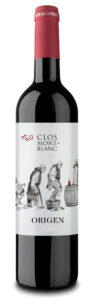
- Clos Mont-Blanc ‘Origén’ Conca de Barberà Tinto 2018
-
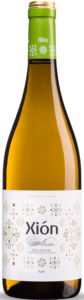
- Attis ‘Xión’ Rías Baixas Albariño 2021
-

- Valduero ‘Dos Cotas’ Ribera del Duero Reserva 2015
TO CLICK & COLLECT ANY OF THESE RECOMMENDATIONS OR TO VIEW THE REST OF OUR RANGE VISIT WWW.WINETIMEWINES.CO.UK
SPECIAL OFFER: QUOTE “YM LIVERPOOL 10” IN OUR SHOP TO GET A 10% DISCOUNT OFF YOUR WINE PURCHASE*
*EXCLUDES BIN ENDS / PROMOTIONAL LINES, SPIRITS, LIQUEURS, CHAMPAGNE & BEERS
Related posts:
 WineTime Liverpool’s Jon Atkinson | Rosé wines for summer sippin’
 WineTime Liverpool’s Jon Atkinson | Marlborough on my mind
 WineTime Liverpool’s Jon Atkinson | Revisiting Rioja
 Sean Millar | A taste of Spanish Rioja
 Sean Millar | Spanish wines for the summer
 WineTime Liverpool | Discovering vegan and vegetarian wines