Eastern promise at the Bergsig Estate
Jon Atkinson profiles a multi-award-winning South African winery with conservation and sustainability at its heart
SOUTH AFRICA HAS A PROUD WINEMAKING heritage dating back well over 400 years. This, coupled with its predominantly Mediterranean climate (at least in the main wine lands area around Cape Town), allows for wines that sit somewhere in between the classic, food-friendly style of Europe and the riper, more fruit-driven style usually associated with the Southern Hemisphere.
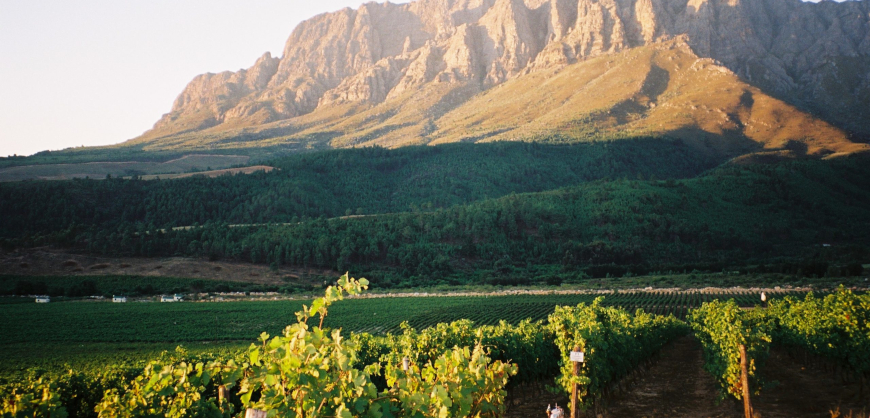
We are very proud to import wines from Bergsig Estate which can be found in the up-and-coming W.O (Wine of Origin) of Breedekloof; a magnificently scenic region in the foothills of two mountain ranges – Hex River and Drakenstein. It is about one and a half hour’s drive east-northeast of Cape Town.
Being further away from the coast, one would expect a significantly warmer climate, but at the eastern entrance to the historic Bainskloof Pass, where the farm is located, the valley narrows creating a funnel effect cooling the summer breezes which coupled with the relatively high altitude, cold winters with snow through to spring and rainfall with additional meltwater from the mountains, makes for an excellent wine-growing environment.
Bergsig, meaning ‘mountain view’, was founded in 1843 and is still owned by the Lategan family, with De Wet Lategan, the sixth-generation winemaker here. Being an estate, all of their wines are made from grapes grown on the property, with no fruit bought in. Whilst not officially organic, the vineyards are farmed as sustainably as possible and are IPW (Integrated Production of Wine) certified, not just in terms of striving for optimal grape quality, but also in terms of conservation, which is very much at the heart of all that they do here right across the 437 hectares, encompassing mountain, valley and river.
Bergsig Gewurztraminer 2023 (12%)
As a variety, Gewurztraminer is synonymous with Alsace in eastern France, although its name is Germanic and to complicate matters further, it is thought to have originated from the town of Tramin in South Tyrol, Italy! Being an (extremely) aromatic variety, it tends to fare best in relatively cool climates, and with the fruit having a naturally high sugar content, most wines usually have a little sweetness to them.
This delightful example is pale straw in appearance, with silver-gold tints and surprisingly high viscosity. A fresh, fragrant nose and crisp, fresh and just off-dry in the mouth with a vibrant acidity. £10.75
Bergsig ‘Barrel Fermented’ Chardonnay 2022 (13%)
Chardonnay is still, statistically, one of the most popular white grape varieties. At its best (and most expensive) from Burgundy’s Côte de Beaune, Chardonnay is an incredibly accommodating variety and can be grown pretty much anywhere. This cracker from Bergsig was fermented and then aged for six months in 300-litre oak barrels before bottling. Deep straw/pale gold in colour with silver tints and medium+ viscosity.
A rich, leesy nose with a bright, lemon and pineapple fruit with hints of lanolin and delicate vanilla oak. Broad, creamy mouth feel with a tang of acidity, ripe orchard fruits and toasty oakiness with good length and a rich, creamy finish. £11.95
-
- Bergsig Pinotage 2020
-

- Bergsig Cape LBV 2018
-
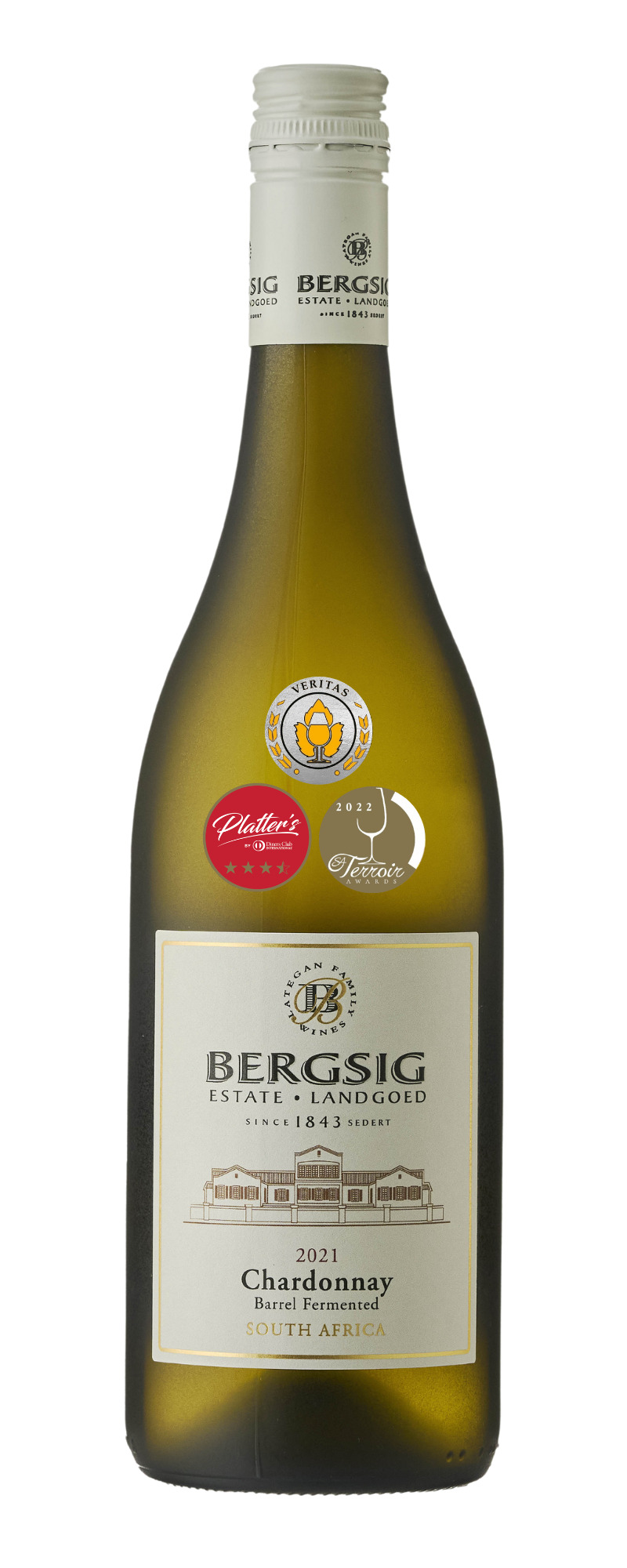
- Bergsig ‘Barrel Fermented’ Chardonnay 2022
-
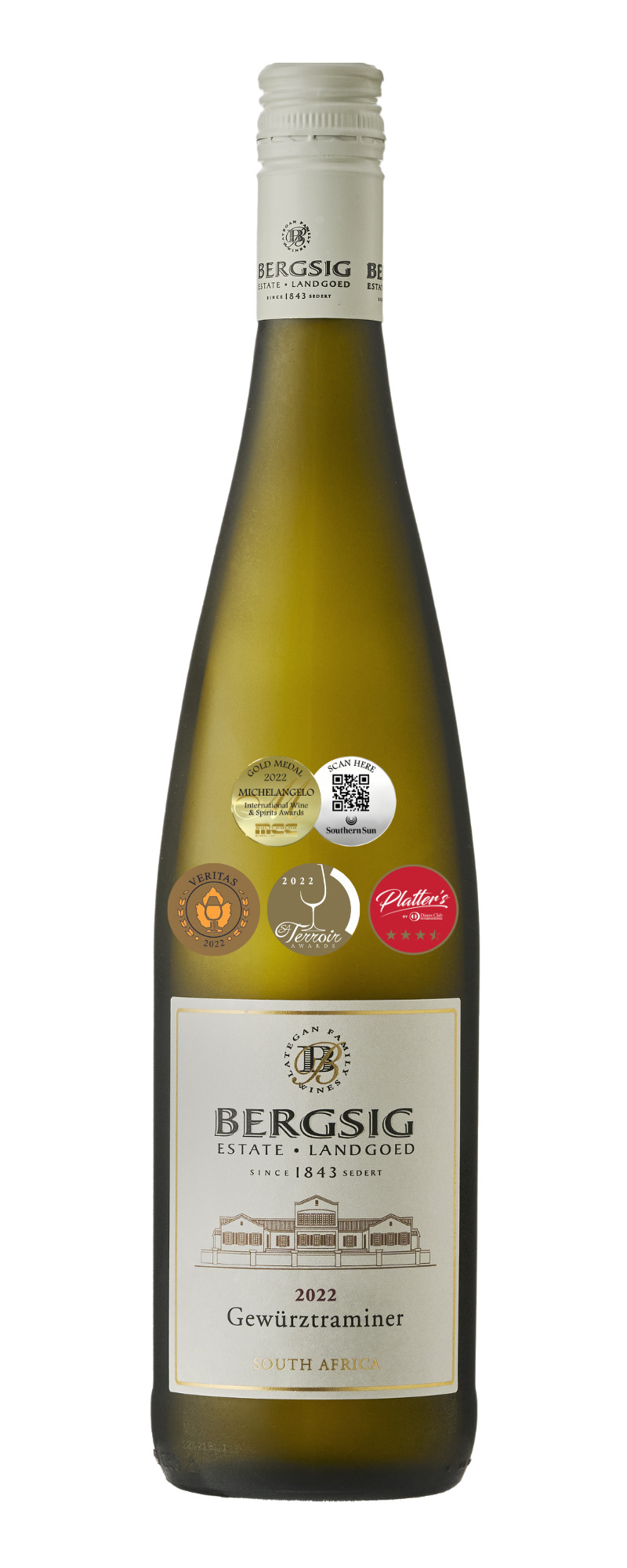
- Bergsig Gewurztraminer 2023
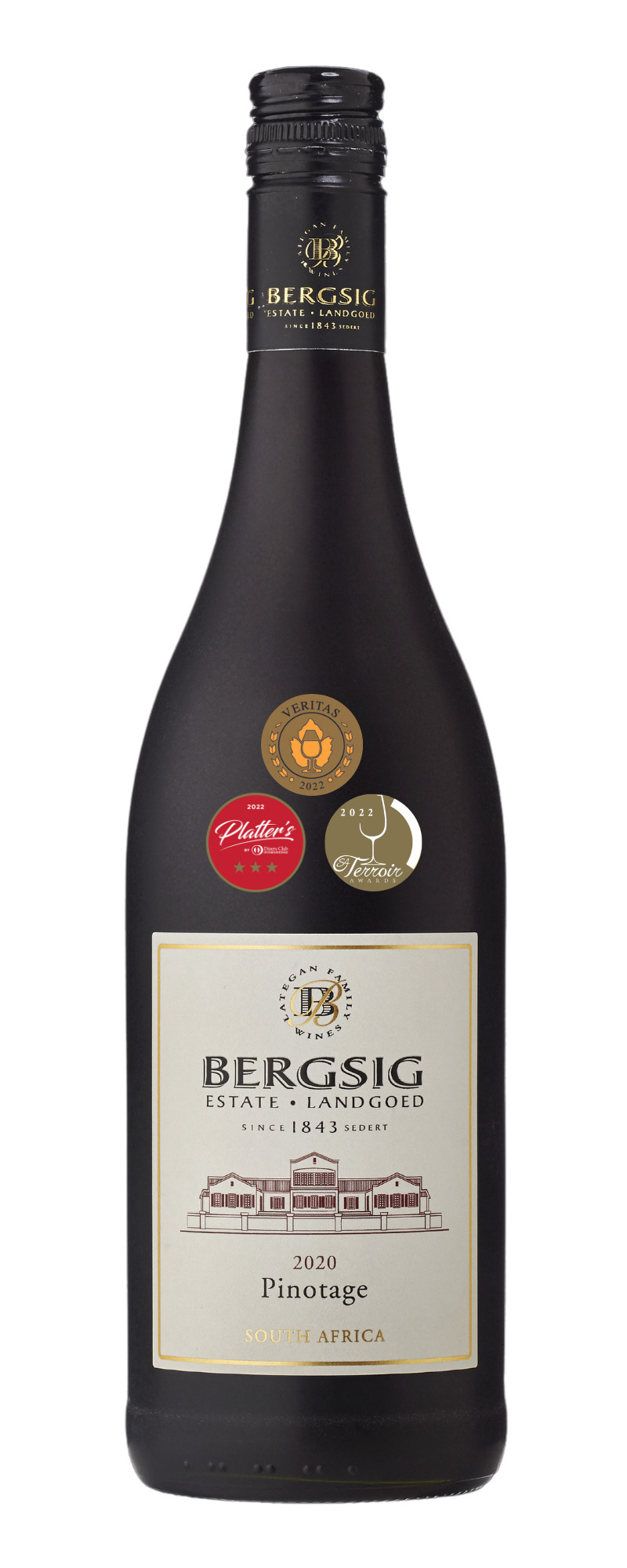
Bergsig Pinotage 2020 (14.5%)
Once upon a time, Pinotage was very much a Marmite variety, with a small but loyal following. Nowadays, with improved winemaking techniques, the textbook aromas of ‘burned rubber’ are largely a thing of the past. Pinotage is a uniquely South
African variety, that is technically a hybrid, that is it was ‘invented’ in the mid-1920s by Abraham Perold, professor of viticulture at the University of Stellenbosch.
This example one sits at the more robust end of the spectrum; a powerful, full-bodied red with masses of rich, aromatic plum and spicy da
rk berry fruit with a sweet oakiness and firm, ripe tannins. Very much a food wine, it works well with spicy dishes or barbequed food. £13.25
Bergsig Cape LBV 2018 (17%)
Some cute marketing here as ‘Port’ (which to all intents and purposes is what this is) can only be called thus if it was produced in Portugal’s Douro Valley. Although Bergsig does grow Touriga Nacional, Portugal’s signature red grape, this is made from Tinta Barroca, another well-established Port variety.
A most inviting, garnet-red in appearance, with warming fruitcake richness on the nose with Morello cherry, sandalwood and Clove aromas. It is a little richer and sweeter than its Portuguese cousin, with flavours of blueberries, Kirsch and marzipan making it an excellent pairing with chocolate-based desserts. It also works well with full-flavoured blue cheese and is a shoe-in with Christmas cake/pudding! £18.50